Falling Ontario Condo Values and the Management Crisis Behind Them

Dr. Rajendra K Panthee

I recently listened to an episode of the Angry Mortgage Podcast that stayed with me, especially when I thought about how many people in the GTA and beyond have put their savings into condominiums. For many investors the plan seems simple enough. Buy a condo, rent it out, let the tenant cover most of the mortgage, and wait for the property to appreciate.
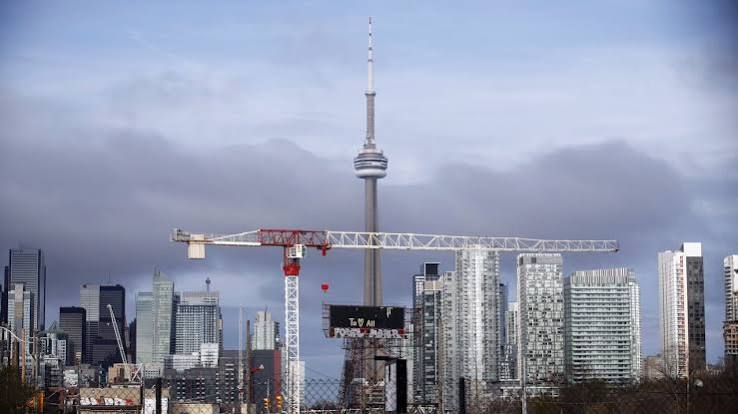
Most of the current conversation about GTA condos centres on falling prices, high interest rates, weak rental returns, pre-construction buyers who cannot close, and owners forced to sell. Those problems are serious. The case discussed on the podcast points to a different one, which is what happens when the condominium corporation itself runs into financial trouble, and the building’s governance comes into question.

According to the podcast, a property management company connected to a group of Ontario condominium properties has faced bankruptcy proceedings, with millions of dollars reportedly owed to creditors. The debts allegedly include unpaid bills to electricity and water providers, insurers, elevator service companies, garbage collectors and snow-removal contractors. The total was reportedly around $5 million.

If those allegations are accurate, this goes well beyond an accounting problem. It raises the question of whether the buildings can keep running normally.

When you buy a condo, you own your unit, but your investment depends on a much larger system. Someone has to maintain the elevators, heat the building, clear the snow, collect the garbage, look after the common areas and keep the insurance in place. Someone also has to pay all the bills. That only works if the condominium corporation is financially healthy.

A building can look fine from the outside while serious problems build behind the scenes. Picture an investor who bought because the price looked attractive and the spreadsheet made sense. The tenant pays rent every month and the mortgage gets paid. Then an elevator stops working, the garbage piles up, and a contractor refuses to come back because earlier invoices were never paid. The building’s insurance becomes uncertain. At that point, the value of the unit no longer depends only on what another buyer will pay. It depends on whether the whole building functions.

The podcast raises these concerns directly, including the worry that essential contractors might stop servicing buildings if they are not paid. For someone living on the tenth floor, a working elevator is a basic necessity. For an investor, it helps protect the value and livability of the asset.

Most buyers focus on the purchase price, monthly condo fees, mortgage payment, expected rent, property taxes and projected appreciation. Those numbers matter, but they leave out a lot. Investors also need to look at the health of the condominium corporation itself. How much is in the reserve fund, and are the condo fees high enough to sustain it? Are there large outstanding liabilities, major repairs on the horizon or special assessments coming? Can you get the financial statements? Are there disputes with contractors? Is the property manager on solid financial footing?

The most important question may be who is actually making decisions on behalf of the unit owners.

The podcast raises a serious governance concern on this point. According to the discussion, an individual connected to the developer allegedly also controlled the property management company and the condominium boards, while the people who bought the units had no meaningful representation on those boards. Whether those allegations hold up is for regulators and courts to decide. Still, the governance issue deserves attention on its own.

A condominium corporation is supposed to represent the unit owners. When the same people or related entities influence development, management, rental operations and governance, investors should understand exactly how those relationships work. They should know who owns, who manages, who controls, who gets paid and who is accountable. These questions can directly affect someone’s life savings.

One of the most striking suggestions in the podcast is that investors kept receiving rental income even while large debts were allegedly piling up elsewhere in the system. A rental property can look like it is performing well simply because the rent arrives every month. Cash flow today does not tell you whether the underlying asset is financially sound. An investor might look at the bank account and conclude that everything is fine, but a paid rent cheque and a financially sustainable building are separate matters.

Tenants also deserve attention here. The podcast repeatedly stresses the potential impact on the thousands of tenants living in affected properties. If electricity, water, heating, elevators, garbage collection or snow removal are disrupted, tenants can end up in a very vulnerable position. Many of them had nothing to do with the financial decisions behind the problem. They rented an apartment, and they may feel the consequences first. That makes a condo crisis a housing, consumer-protection and community issue as well as an investment story.

I do not think the takeaway is to never buy a condo, and I am not suggesting that every condo corporation or property manager is heading for bankruptcy. The point is simpler. A condo purchase is more than the purchase of a unit. You are also buying into a corporation, a governance structure, a management system and a shared financial obligation.

Existing owners may want to take a closer look at their own condominium corporation. Read the financial statements and understand the reserve fund. Find out whether major repairs or special assessments are coming. Know who sits on the board and who manages the building. Pay attention to any significant legal or financial trouble involving the corporation or its management. None of this is exciting, but it may matter far more than watching the daily movement of condo prices.

The GTA market has spent years encouraging people to see real estate as one of the safest investments around, and for many that belief became almost automatic. Every investment carries risk, though. A condo brings market risk, interest-rate risk, rental risk, construction risk, regulatory risk and management risk. Sometimes the biggest risk sits outside your unit, in the system around it.

The situation discussed on the Angry Mortgage Podcast is worth watching, especially for anyone who has bought GTA condos or condo conversions as rentals. One troubled case does not represent every condominium in Ontario. It does remind us of something investors can easily forget. When you buy a condo, you are not investing alone. You become part of a shared financial and governance system, and when that system fails, the consequences can reach well beyond the walls of your own unit.

When the Condo Investment Stops Making Sense

Dr. Rajendra K Panthee

I recently listened to an episode of the Angry Mortgage Podcast about the growing problems in Canada’s pre-construction condo market. The language was blunt, and at times deliberately provocative, but the message caught my attention because many people in our community in the Greater Toronto Area and other parts of Canada have invested heavily in pre-construction condos.

For some, the problem has already arrived. Condo prices have fallen significantly in some markets, rents have not increased as expected, and higher mortgage rates and maintenance fees have made the numbers much harder to manage. For others, the real problem may come when their pre-construction unit is finally ready to close.

This is an important part of the pre-construction model that many buyers may not have fully considered. You may have agreed to buy a condo three or four years ago for $800,000, for example. You may have already paid a substantial deposit. But what happens if the completed unit is now worth only $650,000?

The developer still expects the original $800,000.

The bank, however, is interested in what the property is worth today.

That difference can create a serious financial problem. The Bank of Canada recently highlighted this exact risk, noting that a condo bought for $1 million could potentially be worth only $700,000 when it is ready for closing. The buyer may still be legally obligated to complete the purchase at the original price.

The other common assumption is that the property can simply be rented out and the tenant will pay the mortgage. That worked much better when interest rates were low and rents were rising quickly. Today, however, the mathematics are not always so attractive.

A condo owner cannot decide how much rent a unit should generate. The rental market decides. If a small condo costs $4,000 a month to carry but similar units can only be rented for $2,800 or $3,000, the investor has to cover the difference.

This is where the discussion in the podcast about Calgary becomes interesting. In some Canadian markets, renters have alternatives. If a tenant can rent a townhouse or another larger home for roughly the same amount as a small condo, the condo may not be as attractive. Population growth alone does not guarantee that every condo will have enough rental demand at the price an investor needs.

Toronto is somewhat different because of its high land costs and the concentration of employment in the urban core. Condos will continue to play an important role in Toronto’s housing market. But that does not mean every condo is a good investment. Recent data show that Toronto’s condo market is adjusting, with prices still significantly lower than a year earlier even as sales have begun to improve.

This is why I think we need to move away from the simple belief that real estate always goes up.

Real estate can be a good long-term investment, but the investment still has to make financial sense. The purchase price, mortgage, maintenance fees, property taxes, insurance and expected rent all matter. So does the question of what happens if the property is worth less than expected when it is completed.

For members of our community who have already purchased pre-construction condos, this is not a reason to panic. But it is a reason to look carefully at the numbers and understand the options before the closing date arrives. Anyone facing an appraisal gap, difficulty obtaining financing or the possibility of not being able to close should get independent advice from a qualified mortgage professional and a real estate lawyer.

For those thinking about buying a pre-construction condo, perhaps the most important question is not whether condo prices will eventually rise again. Nobody can know that with certainty. The better question is whether you can still afford the property if prices do not rise. An investment should not depend entirely on the market doing what you hope it will do. In the end, real estate is not just about owning a property. It is about whether the numbers work. And when the numbers stop working, the mortgage still comes due.

Canada’s Housing Market Is Unfair, Not Broken

Dr. Rajendra K Panthee

Canada’s housing crisis is usually described as a problem of supply and demand. Build more homes, the argument goes, and prices will eventually come down. That explanation contains some truth, but it also hides a deeper reality that Cara Stern brings out in her conversation with mortgage expert Ron Butler. Canada’s housing crisis is not only about supply. It is about fairness.

The question is no longer simply why houses are expensive. The more important question is why the rules of homeownership have changed so dramatically for one generation while remaining so favorable for another.

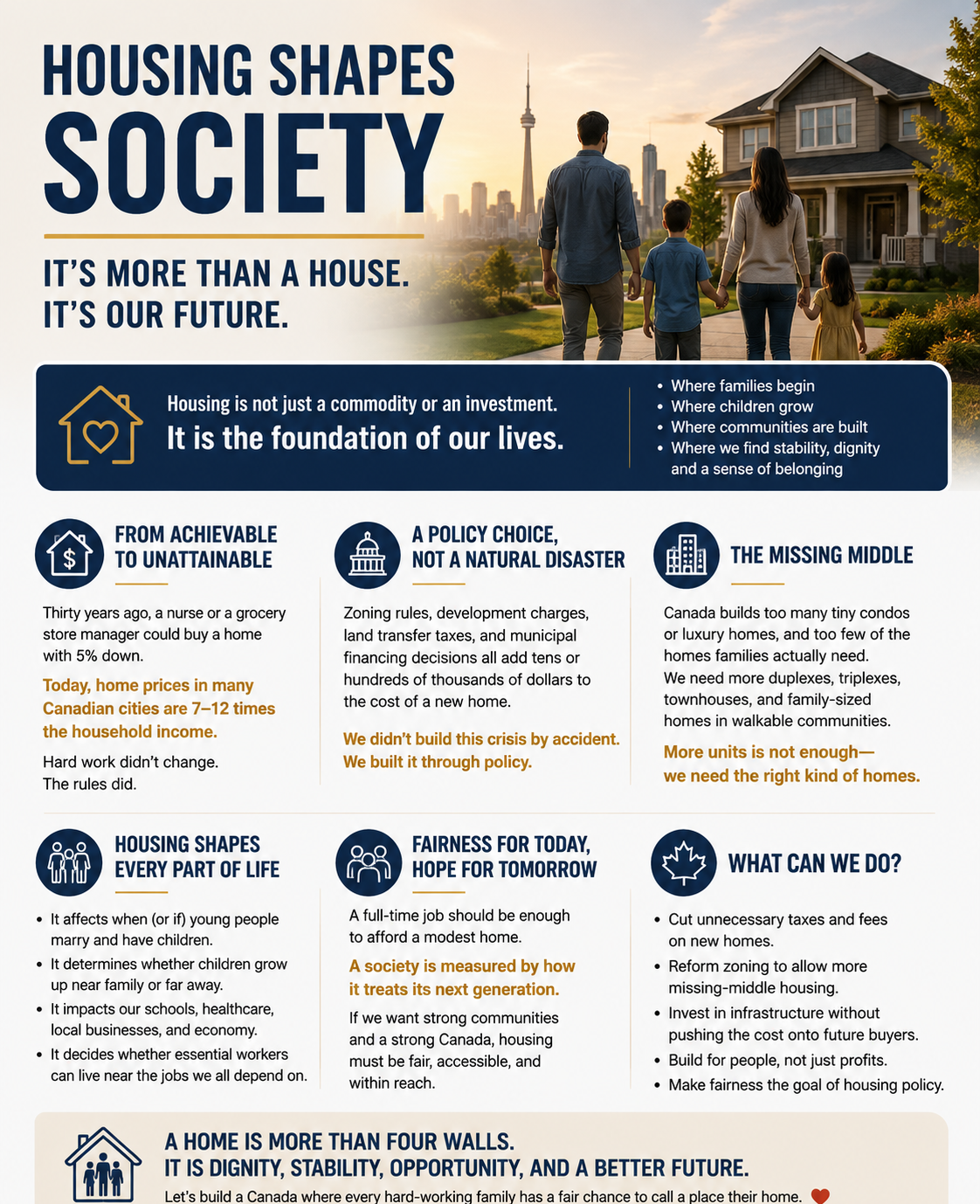
A society cannot remain healthy when people working full time, including teachers, nurses, grocery store managers, engineers, and young professionals, can no longer afford to live in the communities they serve. Housing is more than a commodity or an investment. It is the base on which people build families, careers, communities, and a sense of belonging.

Listening to Stern and Butler, one realizes that the conversation is not really about mortgages or real estate. It is about how decades of public policy have quietly reshaped the Canadian dream.

From Ordinary to Unreachable

Ron Butler recalls entering the mortgage industry more than three decades ago when an assistant grocery store manager and a registered nurse could regularly purchase a home in the Greater Toronto Area with a modest down payment. Home prices generally ranged between two and a half and three and a half times a household’s annual income.

Today, in many Canadian cities, particularly Toronto and Vancouver, home prices have reached seven, eight, or even twelve times household income.

That is not just inflation. It is a complete redefinition of adulthood.

For previous generations, buying a home was a realistic milestone reached through employment and savings. For many young Canadians today, homeownership increasingly depends on inherited wealth, parental support, or the willingness to take on decades of crushing debt.

We are told this is progress. It is not. It is a narrowing of social mobility dressed up as a normal market adjustment.

The Myth of Equal Effort

One of the strongest points Stern makes is that acknowledging generational inequality does not diminish the hard work of previous generations.

Many older Canadians respond, quite understandably, by saying, “We worked hard too.”

No one seriously disputes that. The issue is not effort. The issue is whether equal effort still produces equal opportunity.

A young couple earning above the national median income, saving diligently, avoiding extravagance, and making responsible choices can still find themselves priced out of family sized housing. If financially responsible households cannot buy modest homes, the problem cannot be reduced to budgeting discipline or lifestyle choices.

It becomes structural.

Stern speaks from experience. She and her husband were earning above the median household income, living frugally, and saving consistently. Yet they still found themselves unable to purchase even very small homes that could accommodate the family they hoped to build.

That frustration eventually became professional curiosity. Instead of accepting the situation as inevitable, she began asking why the housing market seemed so detached from ordinary incomes. That inquiry led her into housing journalism.

Housing Is a Policy Choice

Perhaps the most important insight in the conversation is Stern’s insistence that today’s housing crisis did not simply happen. It was created through policy.

Too often Canadians speak about housing affordability as though it were a force of nature. It is not.

Governments make decisions about zoning regulations. Governments determine development charges. Governments decide how municipalities finance infrastructure. Governments establish tax systems. Governments regulate land use. Governments shape immigration targets. Governments influence mortgage rules.

Every one of those choices affects housing affordability.

In Stern’s words, the economy is a series of choices.

That changes the whole conversation. If policy helped create the crisis, policy can also help solve it. The challenge is not mainly technical. It is political.

The trouble is that political courage is usually in short supply when the people most protected by the current system are also the loudest defenders of it.

When Cities Fund Themselves Through Housing

One of Butler’s strongest criticisms concerns the enormous rise in municipal development charges.

Municipal governments need revenue, but they do not want to anger existing homeowners by raising property taxes. So instead, they shift infrastructure costs onto new housing developments. The logic is obvious. Existing voters stay happy. Future homeowners pay the bill.

It is a neat trick, and it has been repeated often enough to become normal.

Of course, developers do not absorb these costs forever. They pass them on to buyers. So development charges that were once relatively modest have grown dramatically over the past two decades, adding tens of thousands and sometimes hundreds of thousands of dollars to the price of newly built homes.

The result is perverse. Policies sold as responsible municipal planning end up making homeownership harder for the very people trying to enter the market.

In other words, younger Canadians are paying twice. They pay through high housing prices and again through the financing mechanisms hidden inside those prices.

The Missing Middle

Another major theme in the conversation is Canada’s obsession with building either detached suburban homes or very small condominiums.

What has largely disappeared is what urban planners call the missing middle. Duplexes, triplexes, fourplexes, courtyard apartments, townhouses, and other family sized medium density housing have been squeezed out by zoning rules and planning habits that no longer serve the reality of modern cities.

These forms of housing once allowed neighbourhoods to grow gradually while remaining affordable. Today many municipalities continue to restrict them through rules inherited from another era, as though the car oriented suburbs of the mid 20th century should still dictate how a 21st century city must function.

The result is predictable. Developers either build luxury detached homes where land is available or maximize profit by producing tiny condominium units in expensive urban locations.

Families searching for modest three bedroom homes find very few choices.

Canada has become increasingly successful at producing housing units while becoming less successful at producing homes that ordinary families can actually use. Those are not the same thing.

Counting units tells us little if families cannot live in them.

What Housing Really Means

Perhaps the most affecting part of Stern’s interview is her own plain and deeply human wish.

She does not dream of luxury. She wants what previous generations often treated as ordinary. A stable home. A neighbourhood. Children attending the same school. Some freedom from the anxiety that a landlord may decide to sell and uproot the family.

That should not sound radical. Yet in today’s Canada, even basic stability can sound like a privilege.

Housing shapes far more than the real estate market. It shapes whether people marry, whether they have children, whether they stay in a city, whether they volunteer, whether they build roots, and whether they imagine a future at all.

A country that makes stable housing inaccessible is not just creating a housing problem. It is weakening its own social future.

A Fairness Crisis

The housing debate is usually framed as a contest between homeowners and renters, developers and environmentalists, cities and provinces, or supply advocates and affordability advocates.

Cara Stern’s conversation with Ron Butler suggests a better framework. The central question is fairness.

Can a young Canadian working full time reasonably expect to own a modest home. Can ordinary families remain in the cities where they grew up. Can children afford to live near their parents. Can essential workers afford to live where they work.

If the answer increasingly becomes no, then Canada faces more than a housing shortage. It faces a fairness crisis.

Fixing that will require more than adding units. It will require rebuilding a system that once allowed ordinary work to produce ordinary dreams.

Until that happens, Canada’s housing market will remain not only expensive, but fundamentally unfair.

When Our Distress Becomes Someone Else’s Investment

Dr. Rajendra K Panthee

A group from Montreal is about to spend $500 million buying up unsold condos across the GTA—often at about half the original presale price. These are the very projects that many of our people walked away from after pouring in hard‑earned savings, assignment fees, and years of waiting. Now, the same “problem” that broke individual buyers’ backs is being treated as a “golden opportunity” for big investors.

For months, we watched neighbours cancel assignments, forfeit deposits, and quietly admit defeat. Some families had to choose between sinking more money into overpriced units or walking away with nothing. Many chose the latter—not because they didn’t want to own, but because the market turned against them. Yet, when ordinary people retreat, institutions step in with deep pockets, buying in bulk at deep discounts.

This is not just a real‑estate story. It’s a story about who bears the risk and who reaps the reward. When the market booms, the fantasy is sold to small investors, diaspora families, and first‑time buyers. When the bubble cools, those same buyers are left holding the losses, while corporations quietly acquire entire buildings as “value plays.” Our fear, our stress, our sacrificed savings become their balance‑sheet assets.

What’s even more troubling is what this signals for the future. Those who can buy at half‑price today will likely rent the units back to us at market‑rate or higher tomorrow. Instead of a market correction that brings affordability, we may simply get a transfer of power—from overstretched buyers to consolidated landlords. Public policy and housing regulations have done little to intercept this process. Housing is being treated as a financial instrument, not as a basic human need.

For our community, this moment should be a wake‑up call. We need to stop seeing every presale project as a guaranteed “investment” and start asking: Who really benefits when we are forced to walk away? We need to push for policies that protect small buyers, cap speculative land banking, and ensure that when the market crashes, ordinary people are not left alone to pay the price.

This is not just about losing money in a condo deal. It’s about who controls housing, who gets bailed out, and who gets erased from the story. If we don’t speak up now, our pain today will be written off as “market correction” in textbooks—while the profits quietly go to those who knew exactly when to buy at the bottom.

Home Purchase Failures in Ontario Are Up 500% — What Our Community Needs to Know?

Dr. Rajendra Panthee

I recently watched a podcast by mortgage expert Ron Butler discussing a troubling trend in Ontario’s real estate market: home purchase failures have increased by 500% compared to pre-COVID levels.

That number should make all of us pause.

What Is a “Purchase Failure”?

A purchase failure happens when a buyer signs a contract to buy a home — new construction or resale — but cannot close the deal on the agreed closing date.

In simple terms:
The buyer doesn’t have the money or cannot secure the mortgage needed to complete the purchase.

Before COVID, less than 1% of purchases failed. Today, that number is reportedly around 5% — and in new construction, some estimate it could be much higher.

Why Are Deals Falling Apart?

There are several major reasons:

1. Appraisal Problems (Especially New Construction)

Many buyers purchased pre-construction homes or condos in 2021–2022 at peak prices. Now that projects are completing:

  • Market values have dropped.
  • Appraisals are coming in far below the original purchase price.
  • Buyers must cover the difference in cash.

If you bought at $1.95M and the appraisal comes in at $1.525M, that’s a $400,000 gap you must cover. Many simply can’t.

2. Condo Market Reality

Some buyers purchased condos years ago at inflated prices, expecting appreciation or easy rental income. Today:

  • Comparable units are selling for less.
  • Higher interest rates mean negative monthly cash flow.
  • Rental income often doesn’t cover mortgage payments.

Some buyers are choosing to walk away from large deposits rather than close on a losing investment.

3. Mortgage Qualification Issues

In resale markets, failures are happening because:

  • Buyers couldn’t sell their existing home for the expected price.
  • Income was overstated or improperly assessed.
  • Job losses occurred before closing.
  • Buyers assumed pre-approvals guaranteed final approval (they don’t).

As Ron Butler bluntly stated: “The buyer doesn’t have the money.”

Why This Matters to Our Community

This is not about panic. It’s about awareness.

When purchase failures rise:

  • Sellers face uncertainty.
  • Builders face stress.
  • Buyers risk losing deposits.
  • Legal disputes increase.
  • Financing becomes stricter.

We are entering a market where leverage cuts both ways.

For years, rising prices hid risk. Today, falling values expose it.

If You’re Buying or Investing, Be Careful

Before signing anything:

  • Get a fully verified mortgage approval (not just a quick pre-qual).
  • Be conservative with projected sale prices.
  • Stress-test your finances at higher interest rates.
  • Understand appraisal risk.
  • Have liquidity reserves.
  • Read pre-construction contracts very carefully.

Speculation worked in a rising market. It is dangerous in a correcting one.

Final Thought

Real estate is not guaranteed to go up. It never was.

The goal is not to scare anyone — but to make sure our community members are informed. The people who survive market corrections are not the boldest. They are the most disciplined.

If you’re planning to buy, sell, or close on a property soon, now is the time to review your numbers carefully.

Awareness today can prevent disaster tomorrow.

Toronto’s Condo Market Isn’t Slowing — It’s Crashing

Dr. Rajendra Panthee

Toronto’s condo market is not experiencing a normal downturn. It’s going through a structural breakdown.

According to Urbanation data, by 2029 Toronto could see virtually no new condo completions. That sounds impossible in one of North America’s fastest-growing regions—but the numbers don’t lie. New condo sales in the GTA have collapsed to their lowest levels since 1991, despite today’s population and housing demand being dramatically higher.

This collapse isn’t random. It’s the failure of the investor-driven condo model.

For over a decade, most pre-construction condos weren’t built for families or end-users. They were built for investors. The model was simple: buy pre-construction, wait a few years, prices rise, rent it or flip it. That model only worked in a world of cheap money, rising prices, and investor optimism. That world is gone.

High interest rates, falling prices, and weaker rents have destroyed the economics of pre-construction investing. As investor demand disappears, the entire development pipeline shuts down.

And here’s the key reality:
Pre-construction sales drive future construction.
When sales collapse, housing starts collapse.
When housing starts collapse, future supply disappears.

This is already happening across the GTA, with housing starts far below long-term averages. Even if demand returns tomorrow, supply cannot restart quickly—condo development is a multi-year process. Today’s sales collapse becomes tomorrow’s supply crisis.

This isn’t primarily about government taxes or red tape. Housing starts are falling across North America. This is a housing cycle problem, amplified in Toronto because the city became deeply dependent on speculative investor demand.

The economic impact will go far beyond housing. Construction jobs, trades, suppliers, engineers, and entire supply chains are affected. Housing doesn’t just reflect the economy — it drives it.

But this doesn’t mean prices will automatically surge in a few years. Future outcomes depend on uncertain factors: population growth, immigration, interest rates, economic conditions, and income growth. Anyone selling a simple “supply crash = guaranteed boom” story is oversimplifying reality.

The truth is simpler and more honest:

Toronto’s condo market has hit a breaking point.
The investor model no longer works.
The supply pipeline is shrinking.
And the housing system is entering a painful but necessary reset.

What comes next won’t be shaped by hype —
it will be shaped by fundamentals, policy, and economic reality.

Who Broke Canada’s Housing Market: Government or the Market?

Dr. Rajendra Panthee

Canada’s housing crisis is often discussed in absolutes: either prices will crash, or they will never fall; either governments must intervene more, or get out of the way entirely. But when we place recent market conditions alongside deeper structural critiques—like those raised on Angry Mortgage—a more complicated, and more honest, picture emerges.

A Short-Term Opening for Buyers

In the near term, there is a meaningful shift underway—particularly in markets like Toronto and Vancouver.

Sales volumes are historically low. Investor activity has largely evaporated. Pre-construction is stalled. Buyers who remain are mostly end users: families and individuals looking for a place to live, not to flip. This has quietly shifted leverage. Selection has improved. Negotiation is back. Sellers, not buyers, are adjusting expectations.

This does not mean we are at the “bottom,” nor does it mean prices cannot fall further. But for financially stable households—especially first-time buyers who were entirely shut out between 2020 and 2022—this is the most buyer-friendly environment in years.

Yet this short-term opening exists inside a housing system that remains fundamentally broken.

The Structural Problem: Housing as a Government Revenue Tool

As Ben Woodfinden argued on Angry Mortgage, the most under-discussed driver of unaffordability is not speculation alone, immigration alone, or even interest rates—but government cost-loading on new housing.

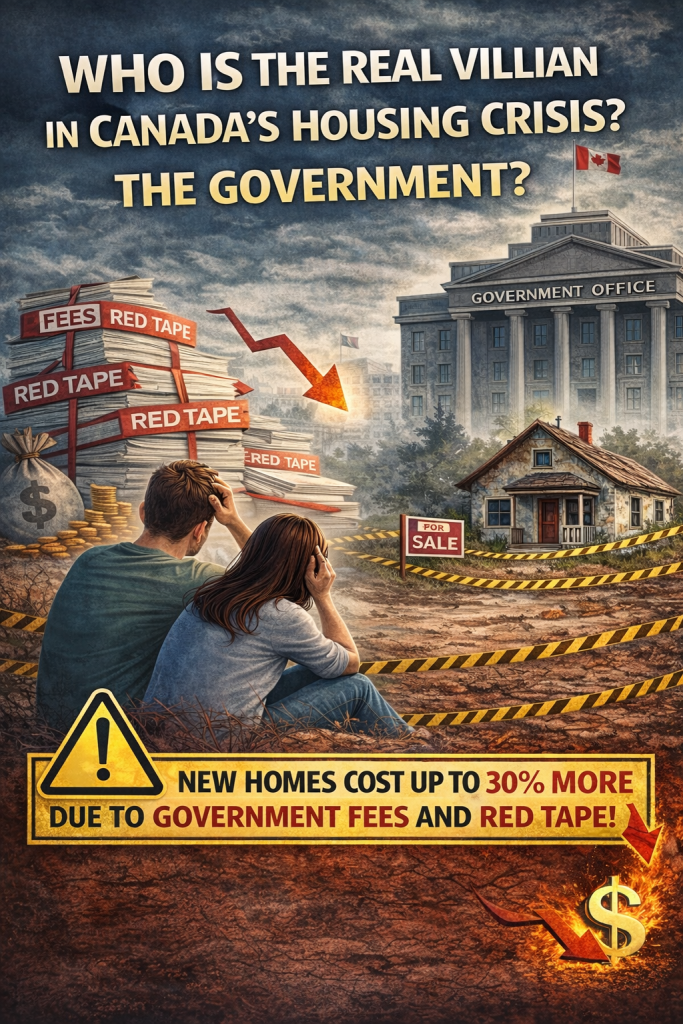
In cities like Toronto, as much as 30% of the cost of a new home is made up of development charges, fees, taxes, and levies. These are not marginal costs. They are embedded into the price of every unit, passed directly to buyers, and treated as a normal feature of governance.

Housing, in effect, has been taxed like a luxury good—while being rhetorically framed as a human necessity.

Layered on top is what Woodfinden calls the “Anglo disease”: a regulatory culture that makes building slow, adversarial, and legally dense. Years of approvals, consultant reports, appeals, and political veto points create scarcity by design. The result is not careful planning—it is paralysis.

This is how Canada ends up with 50-storey towers beside single-family zoning, and almost nothing in between.

The Missing Middle—and the Missing Social Contract

What ties these discussions together is not just economics, but expectations.

A generation of Canadians did what the social contract asked of them: education, work, saving, delayed gratification. Yet homeownership now requires top-1–2% household incomes in major cities. The promise that effort leads to stability has quietly collapsed.

That anger is not theoretical. It shows up in delayed families, longer commutes, overcrowding, and a growing sense that democracy responds faster to asset holders than to workers.

When young professionals earning $90,000–$100,000 cannot even imagine owning a modest home, something deeper than market cycles has failed.

So Where Does This Leave Us?

In the short run, today’s market offers cautious opportunity for buyers who are purchasing shelter, not status.

In the long run, affordability will not be restored without structural change:

  • Development charges must be rethought.
  • Zoning must allow mid-density housing where people already live.
  • Speed, not symbolism, must become the metric of housing policy.

More programs alone will not fix this. Nor will pretending the market can self-correct under the current regulatory load.

A Critical Outlook

Canada’s housing crisis is not caused by a single villain. It is the outcome of decades of policy choices that treated housing simultaneously as an investment vehicle, a revenue source, and a political risk to be avoided.

Buyers may find a window today—but unless governments stop profiting from scarcity while promising affordability, that window will close again.

The question is no longer whether housing is broken.
It is whether we are willing to stop pretending we don’t know why.

Mortgage Renewals, Bankruptcy, HELOCs, and Canadian Housing Market Future

Image from Bankruptcy Canada

The Hidden Debt Crisis: What’s Really Happening with Canadian Households in 2025

Based on insights from Doug Hoyes, leading consumer debt expert and co-founder of Hoyes Michalos

If you’ve been feeling financially squeezed lately, you’re not alone. A recent conversation between John Pasalis of MoveSmartly and Doug Hoyes, one of Canada’s foremost experts on consumer debt, reveals a troubling picture of what’s happening beneath the surface of our economy—and surprisingly, it might be worse than the statistics suggest.

The Numbers That Don’t Add Up

Here’s what’s puzzling experts: despite record-high debt levels, rising unemployment, and a challenging real estate market, consumer insolvencies in Ontario haven’t exploded the way many predicted. In fact, they’re only slightly higher than last year.

“What’s most amazing to me is they aren’t as high as I would expect them to be,” admits Hoyes, whose firm has been tracking insolvency trends for nearly 30 years.

So what’s really going on?

The Great Divide: Homeowners vs. Renters

The data reveals a stark reality about Canada’s two-tier economy. Back in 2011, about one-third of Hoyes’ clients were homeowners when they filed for insolvency. By August 2022, that number hit zero—the only time in the firm’s history.

Today, it’s crept back up to around 10%, but that’s still dramatically lower than historical norms.

Why the shift? It comes down to equity. If you bought a house decades—or even just years—ago, you’ve likely built substantial equity that acts as a financial buffer. Need to deal with credit card debt? Refinance, get a HELOC, or sell and pocket the difference.

But if you’re renting? You have no equity cushion whatsoever. You’re the most vulnerable to job loss, inflation, and rising costs.

The Precon Time Bomb

One of the most concerning trends Hoyes discusses is the wave of preconstruction condos that buyers can’t close on. Here’s how the crisis unfolds:

  • Buyer purchases a precon condo in 2022 for $1 million with a $100,000 deposit
  • Property finally ready for occupancy in 2024-2025
  • Current appraisal: $700,000-$800,000
  • Bank refuses to provide a $900,000 mortgage on a $700,000 property
  • Buyer cannot close

Unlike the United States, Canadian buyers have full recourse—they can’t simply walk away. Builders can sue for their losses, potentially going after your other assets, including your primary residence.

“We’ve got this massive amount of pent-up problems—precons that aren’t closing that have not yet resulted in hardly any bankruptcies because the legal process hasn’t consummated yet,” Hoyes explains. “That’ll be a story for 2026, probably into 2027.”

Why Banks Are Playing the Waiting Game

Another revelation: many borrowers have stopped making mortgage payments on rental properties, yet banks aren’t aggressively pursuing power of sale proceedings.

Hoyes shares the story of a client who stopped paying her rental property mortgage in August—and months later, the bank had done virtually nothing beyond sending a letter.

The theory? Banks may be slow-walking foreclosures to avoid flooding the market with inventory, which would drive prices down further and crystallize everyone’s losses. With many borrowers in similar situations, a wave of simultaneous foreclosures could trigger a broader market collapse.

The Rental Property Trap

The mathematics of rental properties have turned brutal for many investors:

  • Monthly shortfall of $1,000-$2,000 was common but manageable when prices were rising $100,000+ annually
  • Investors borrowed from HELOCs and unsecured lines of credit to cover the gap
  • After 2-3 years of monthly shortfalls, credit lines are maxed out
  • Property values have declined or stagnated
  • No equity to refinance
  • No cash flow to continue

“Unless you’re the federal government, you cannot run a deficit every month forever and not experience the consequences,” Hoyes notes bluntly.

A Generation Locked Out

Perhaps most troubling is Hoyes’ explanation of why gambling, risky investing, and speculative real estate purchases have exploded among younger Canadians:

“If you are 25 years old today, you know that there is no hope that you will ever be able to buy a house unless your parents give you the money. There is no mathematical way you can do it.”

He paints a stark picture: making $80,000-$90,000 annually leaves about $50,000-$60,000 after tax—barely enough to cover living expenses in major Canadian cities, let alone save $200,000 for a down payment.

This sense of hopelessness has driven many toward high-risk strategies: gambling apps, cryptocurrency, options trading, and yes—speculative real estate purchases.

The Leverage Trap

Real estate’s appeal as a get-ahead strategy is rooted in leverage. With just 5% down, a 10% increase in property value triples your initial investment (on paper). You can’t get that kind of leverage in the stock market, where margin requirements are typically 50% or higher.

But leverage cuts both ways. When property values decline by 20-30%, highly leveraged buyers don’t just lose their down payment—they end up owing substantially more than their property is worth.

Warning Signs Ahead

Several trends suggest 2026 could bring more financial pain:

  1. Rising bankruptcy rates: The percentage of bankruptcies versus consumer proposals is increasing because people simply don’t have enough income to make payment plans work
  2. Debt too high to restructure: Some people now owe so much (particularly on failed precon purchases) that they exceed the $250,000 limit for consumer proposals and must file bankruptcy instead
  3. Shrinking cash flow: Unlike previous decades where inflation gradually made fixed payment plans easier over time, today’s rising costs mean those $300 monthly proposal payments get harder each year, not easier
  4. Precon lawsuit wave: As builders begin quantifying their losses and pursuing legal action against buyers who couldn’t close, a wave of judgments and garnishments is likely coming

What You Can Do

Whether you’re a homeowner or renter, Hoyes offers practical advice:

Take inventory honestly:

  • List all assets (be realistic about current market values)
  • List all debts with amounts, interest rates, and minimum payments
  • Calculate your actual monthly cash flow

Be realistic about solutions:

  • Can you increase income (part-time work, side gig)?
  • Can you reduce expenses meaningfully?
  • If you’re a homeowner, does selling and renting make sense?
  • Could you move in with family temporarily?

Get professional advice early: “Debt problems do not get better on their own magically. It’s just not how it works,” Hoyes emphasizes.

If you’re overwhelmed, speak with a licensed insolvency trustee—they’re the only professionals licensed by the federal government to administer proposals and bankruptcies. About three-quarters of people who contact them end up finding solutions without filing insolvency.

The Bottom Line

We’re in a strange economic moment where the full extent of financial distress hasn’t yet shown up in official statistics. Banks are delaying foreclosures, legal processes are grinding slowly, and many people are simply kicking the can down the road.

But as Hoyes makes clear, this can’t continue indefinitely. The mathematical reality will eventually catch up.

For those feeling squeezed: you’re not imagining it, you’re not alone, and there are steps you can take before things become crisis-level. The key is acting before you’ve exhausted all your options.

Housing Bubble and Buying a Property in Canada

Before you buy a house in Canada in general and Greater Toronto Area (GTA) in particular, you need to know about a housing bubble. The reason I keep saying do not just jump into the market yet is because the real estate practitioners are worried whether the bubble is going to burst anytime soon. Remember housing price was at the peak in 2022 and the price was checked with the interest rate rise. It is not that the bubble is burst yet, it is just controlled. It is important to understand it. Let’s talk about what it is. 

A housing bubble happens when housing prices skyrocket, and real estate values become so unsustainably high that eventually the bubble bursts. Housing prices are disconnected from the “intrinsic property values.” Intrinsic property values are prices based on economic factors like income levels, rental costs, and other things that traditionally influence property values. Skyrocketing housing bubble prices occur when several things happen at once. Some of the contributing factors are: Speculation, Limited Housing, Interest Rates, Mortgage Debts, and Increased Development. 

Easing of Inflation and Canadian Housing Market

“If inflation continues to ease, and our confidence that inflation is headed sustainably to the 2-per-cent target continues to increase, it is reasonable to expect further cuts to our policy interest rate. But we are taking our interest rate decisions one meeting at a time.” Mr. Macklem said. The Bank of Canada is the first G7 central bank to start easing monetary policy. The European Central Bank is expected to follow suit on Thursday, while the U.S. Federal Reserve, which is dealing with a stronger economy and more stubborn inflation, is expected to hold off rate cuts until later in the year. 

The next meeting is on July 24, six weeks from now. This interest rate cut is like “finally, the interest rate is not going to increase.” Nothing more than that.  Looks like this rate cut is not going to bring any momentum in a near future. Since the current inventory dictates price of a house for at least 90 days, there is more than enough inventory in the GTA housing market. Based on the current listing, free hold market may go up whereas condo market will stay same or go down until the current inventory is cleared up since there is too much inventory in the condo market.