
Dr. Rajendra K Panthee
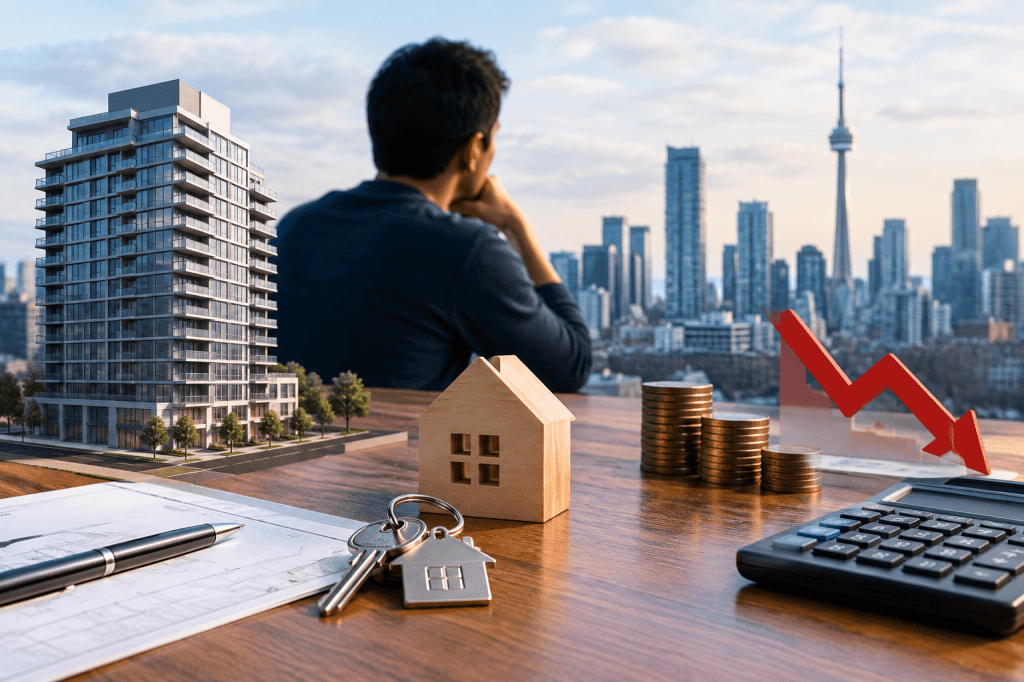
I recently listened to an episode of the Angry Mortgage Podcast about the growing problems in Canada’s pre-construction condo market. The language was blunt, and at times deliberately provocative, but the message caught my attention because many people in our community in the Greater Toronto Area and other parts of Canada have invested heavily in pre-construction condos.
For some, the problem has already arrived. Condo prices have fallen significantly in some markets, rents have not increased as expected, and higher mortgage rates and maintenance fees have made the numbers much harder to manage. For others, the real problem may come when their pre-construction unit is finally ready to close.
This is an important part of the pre-construction model that many buyers may not have fully considered. You may have agreed to buy a condo three or four years ago for $800,000, for example. You may have already paid a substantial deposit. But what happens if the completed unit is now worth only $650,000?
The developer still expects the original $800,000.
The bank, however, is interested in what the property is worth today.
That difference can create a serious financial problem. The Bank of Canada recently highlighted this exact risk, noting that a condo bought for $1 million could potentially be worth only $700,000 when it is ready for closing. The buyer may still be legally obligated to complete the purchase at the original price.
The other common assumption is that the property can simply be rented out and the tenant will pay the mortgage. That worked much better when interest rates were low and rents were rising quickly. Today, however, the mathematics are not always so attractive.
A condo owner cannot decide how much rent a unit should generate. The rental market decides. If a small condo costs $4,000 a month to carry but similar units can only be rented for $2,800 or $3,000, the investor has to cover the difference.
This is where the discussion in the podcast about Calgary becomes interesting. In some Canadian markets, renters have alternatives. If a tenant can rent a townhouse or another larger home for roughly the same amount as a small condo, the condo may not be as attractive. Population growth alone does not guarantee that every condo will have enough rental demand at the price an investor needs.
Toronto is somewhat different because of its high land costs and the concentration of employment in the urban core. Condos will continue to play an important role in Toronto’s housing market. But that does not mean every condo is a good investment. Recent data show that Toronto’s condo market is adjusting, with prices still significantly lower than a year earlier even as sales have begun to improve.
This is why I think we need to move away from the simple belief that real estate always goes up.
Real estate can be a good long-term investment, but the investment still has to make financial sense. The purchase price, mortgage, maintenance fees, property taxes, insurance and expected rent all matter. So does the question of what happens if the property is worth less than expected when it is completed.
For members of our community who have already purchased pre-construction condos, this is not a reason to panic. But it is a reason to look carefully at the numbers and understand the options before the closing date arrives. Anyone facing an appraisal gap, difficulty obtaining financing or the possibility of not being able to close should get independent advice from a qualified mortgage professional and a real estate lawyer.
For those thinking about buying a pre-construction condo, perhaps the most important question is not whether condo prices will eventually rise again. Nobody can know that with certainty. The better question is whether you can still afford the property if prices do not rise. An investment should not depend entirely on the market doing what you hope it will do. In the end, real estate is not just about owning a property. It is about whether the numbers work. And when the numbers stop working, the mortgage still comes due.
