The Rich Men’s Club That Nepal Never Had

Dr. Rajendra K Panthee
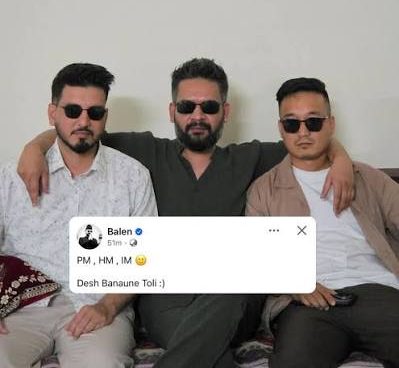
Picture from Balen Shah’s Facebook!

Sometimes I wonder whether some of our newest political heroes in Nepal simply chose the wrong career.

Perhaps they should never have entered government at all.

Instead, they should have established a national institution called the Rich Men’s Club for Nepal’s Development.

Membership would be simple. You must already have enough money that politics cannot tempt you. You must sincerely love Nepal. And you must be fully convinced that everyone who governed before you was either corrupt, incompetent, or both.

Confidence has never been in short supply.

The Club would have obvious advantages. Its members could build schools without first declaring every existing school a failure. They could finance hospitals without turning administrative reshuffling into public spectacle. They could support universities without discovering halfway through that institutions cannot function when leadership is abruptly removed without due process.

They could fund scholarships instead of exposing how fragile national systems can be when handled without care. They could experiment freely and revise quietly.

Most importantly, they could spend their own money while testing their own ideas.

Citizens would applaud. Nobody would object. Everyone likes philanthropy.

What people fear is something else. They fear becoming unwilling participants in political experiments.

The problem begins when success in media, business, or public visibility starts to look like qualification for constitutional leadership.

Business rewards speed. Democracy rewards restraint.

Business celebrates disruption. Democracy survives because institutions are deliberately difficult to disrupt.

In a company, yesterday’s strategy can be abandoned overnight. In a constitutional system, institutions exist because they were built through long struggle and painful compromise.

That difference matters.

Yet recent political practice suggests a different understanding of governance. It resembles a simple pattern. Announce boldly. Receive applause. Encounter legal difficulty. Clarify. Revise. Then explain that revision shows maturity.

Repeat as necessary.

Citizens have already adapted. They no longer react to the first announcement. They wait for the correction.

The rise of the Rastriya Swatantra Party was built on real public frustration. That frustration was justified. Established parties have failed repeatedly on governance, accountability, and delivery. Rabi Lamichhane’s appeal came from positioning himself outside that failure.

That appeal translated into political power. It did not automatically translate into constitutional competence.

Rabi Lamichhane’s political brand helped create the belief that a new kind of leadership could rescue Nepal from old habits. But governing a republic is not the same as exposing a scandal on television or winning public applause for speaking hard truths. It requires respect for law, procedure, and the limits of authority.

Gyanendra Shahi has been among the clearest voices exposing that contradiction. He has criticized RSP for rising on public anger and then behaving as if it stands above the same political rules it used to condemn. That criticism matters because it comes from inside the wider opposition space and shows that the complaint is no longer only external. It is now part of the political conversation itself.

The same problem appears in the rise of Balen Shah. He came from outside the old political class. He had money, talent, visibility, and a public image built around independence. Many people trusted him because they believed he was not part of the corrupt machinery that had disappointed them for years.

That trust was understandable. It was also dangerous if it became blind faith.

If a person enters public office with wealth and good intentions, that is not a sin. The problem begins when he starts treating state institutions as if they were private projects that can be redesigned by instinct. Government is not a startup. It is not a foundation. It is not a club. It is the formal arrangement through which a diverse and often quarrelsome society manages power without destroying itself.

That is why constitutional norms exist.

This is where the richer satire lies. If these leaders already had money, and if they genuinely wanted to serve the country, then the honest path would have been to serve first through private or civic institutions. They could have built schools, hospitals, scholarship funds, local development trusts, research centers, and civic programs. They could have shown public spirit without touching the machinery of the state.

That route would have done two things.

It would have protected constitutional government from being treated as a laboratory.

And it would have given them the very thing they lack now, practical experience in handling complexity.

A country is not run by outrage alone. It is run through compromise, restraint, process, and an acceptance that every decision has consequences beyond the headline. A mayor, minister, or prime minister cannot simply act on impulse and then expect legality to catch up later.

That is why some of the actions associated with the current RSP leadership have created unease. Strong declarations often arrive before the legal foundation is secure. Public relations moves sometimes appear to matter more than institutional durability. Even the cabinet can look more like a showcase of youthful enthusiasm than a serious instrument of statecraft.

The home minister, the education minister, and others may all carry the burden of this same style. They are expected to perform change quickly, visibly, and dramatically. But performance is not the same as governance. And novelty is not the same as competence.

The problem becomes even clearer when this same instinct is applied to the poor.

A government can claim to be modern and disciplined, but if it shows little compassion toward sukumbasi, informal workers, and people living on the edge of survival, then it is not reforming the state. It is hardening it.

Reports of holding centers being emptied with demands for Rs 25,000, the public anger after flooding forced some of those centers to be shifted, and the outrage over how vulnerable families were handled all point to the same failure. Rules are necessary. But rules without study, without context, and without humanity are not governance. They are punishment dressed as order.

A state that cannot understand the difference between discipline and cruelty will eventually lose its moral authority.

Yubaraj Dulal has also spoken forcefully against the same double standard. He has treated RSP’s approach to the provincial question and its wider conduct as dishonest toward the people rather than as some innocent administrative adjustment. That matters because it shows the criticism is not just about style. It is about the party’s willingness to say one thing and do another when it suits power. The provincial question especially reveals the problem, because a federal structure built through sacrifice cannot simply be brushed aside by political impatience. The decision is not neutral. It is a political message about what kind of state the party thinks Nepal should become.

The same concern appears in the use of fines and enforcement. It is one thing to insist on order. It is another to impose penalties without asking who will suffer most. When poor people are punished harshly for violations that the wealthy can absorb with ease, the law stops looking neutral. It starts looking class based.

The death of Ganesh Nepali brought that cruelty into sharp focus. According to reporting and parliamentary debate, a poor ride-hailing driver was fined and then later died after a self-immolation attempt, turning a routine enforcement action into a moral scandal. Whatever one thinks of rules, no civilized government can dismiss such a case as ordinary administration. It should have forced a deeper reflection on how the state treats the poor, the desperate, and the powerless.

That is why public criticism of harsher fines matters. People are not rejecting rules. They are rejecting a system that appears eager to punish the weak while speaking gently to the powerful.

Nepal’s democratic institutions were not handed down by benevolent rulers. They were built through resistance against Rana rule, through the struggle against Panchayat, through democratic movements, and through the sacrifices of people who believed that the country should be governed by rules, not personalities.

Those sacrifices created a system that is imperfect but precious.

To break its norms in the name of change is not courage. It is carelessness.

To appoint near and dear ones to key posts while speaking the language of merit is not reform. It is old patronage in new clothing. To talk about efficiency while treating the poor as administrative inconvenience is not compassion. It is class arrogance.

This is why the idea of a Rich Men’s Club is more than satire. It is a warning. If people have wealth, sincerity, and public trust, let them prove themselves outside the state first. Let them learn how difficult public life is before taking control of it. Let them discover that running a country is not the same as funding a project or speaking in slogans.

If they do that, they may one day become better leaders. They may come to understand that institutions are not obstacles to be defeated but safeguards to be respected. They may also understand that justice without empathy is only a cleaner form of cruelty.

And citizens, having watched them serve without power, would trust them more when they finally do enter government.

That is the real irony.

If these men had chosen the private route first, they might have earned the authority they now assume.

Instead, they entered the state too early and began learning at the public’s expense.

That is an expensive education.

And in every democracy, it is the people who pay the tuition.

Community Organization Election: A Pledge for Selfless Service or an Election Campaign for Self-Promotion?

सामुदायिक संस्थाको निर्वाचन: निस्वार्थ सेवाको प्रतिबद्धता कि आत्म-प्रचारको चुनावी अभियान?

क्यालगरीस्थित NCSC को अहिलेको चुनावी माहोल हेर्दा, NCHC को सञ्चालक समितिमा रहेर काम गरेको आफ्नो अनुभव अनायासै सम्झिन्छु। यसले फेरि एकपटक सम्झाइदियो—सामुदायिक सेवा र चुनावी अभिनय एउटै कुरा होइनन्।

मैले NCHC मा काम गर्दा सेवा भनेको भाषण दिने, सेल्फी खिच्ने वा समावेशिताका आकर्षक नारा लगाउने विषय थिएन। त्यो त बैठकमा बस्ने, चन्दा संकलन गर्ने, दाताहरूसँग समन्वय गर्ने, स्वयंसेवा गर्ने, सरसफाइ गर्ने, भाँडा माझ्ने, प्रसाद वितरणमा सघाउने, र संस्थालाई जुन काम आवश्यक पर्थ्यो, त्यो निस्वार्थ रूपमा गर्ने जिम्मेवारी थियो। किनभने त्यहाँ कसैले पद, प्रतिष्ठा वा सामाजिक सञ्जालको चर्चा कमाउन सेवा गरेको थिएन। मन्दिरमा आधारित परोपकारी संस्थामा सेवा भनेको क्यामेरा अगाडि मुस्कुराउनु होइन; क्यामेरा बन्द भएपछि पनि निरन्तर काम गरिरहनु हो।

तर चुनाव नजिकिँदा एउटा रोचक परिवर्तन देखिन्छ। वर्षौँसम्म नदेखिएका अनुहारहरू अचानक समुदायका सबैभन्दा ठूलो शुभचिन्तक बन्छन्। पारदर्शिताका सबैभन्दा ठूला अभियन्ता उनीहरू नै हुन्छन्। जवाफदेहिताका सबैभन्दा प्रखर व्याख्याता पनि उनीहरू नै हुन्छन्। स्वयंसेवाको महत्वबारे लामो भाषण दिन्छन्, मानौँ संस्थाको सम्पूर्ण इतिहास उनीहरूकै काँधमा उभिएको हो।

चुनाव सकिएपछि भने त्यही जोश, त्यही प्रतिबद्धता र त्यही सेवा भावना कहाँ हराउँछ भन्ने प्रश्नको जवाफ कसैले दिँदैन।

कतिपयका लागि समुदाय भनेको सेवा गर्ने ठाउँभन्दा पनि चुनाव लड्ने मञ्च बन्छ। स्वयंसेवा भनेको जिम्मेवारीभन्दा बढी प्रचार सामग्री बन्छ। संस्थाको कामभन्दा फोटो महत्त्वपूर्ण हुन्छ, पसिनाभन्दा पोस्ट महत्त्वपूर्ण हुन्छ, र योगदानभन्दा प्रचारको मूल्य बढी देखिन्छ। सेवा कम, ब्रान्डिङ बढी; योगदान कम, अभियान बढी।

तर सत्य यति सरल छ—सामुदायिक संस्थाहरू चुनावी मौसममा लेखिएका घोषणापत्रले टिक्दैनन्। ती त वर्षभरि निस्वार्थ रूपमा समय दिने, श्रम गर्ने, आर्थिक सहयोग जुटाउने, भाँडा माझ्ने, कुर्सी मिलाउने, कार्यक्रम सकिएपछि हल सफा गर्ने र कसैले धन्यवाद नदिँदा पनि फेरि अर्को दिन उपस्थित हुने मानिसहरूको काँधमा टिकेका हुन्छन्।

विशेषगरी मन्दिरसँग जोडिएका संस्थाहरूमा सेवा भनेको पद प्राप्त गर्ने माध्यम होइन; त्यो संस्कार हो। त्यहाँ विनम्रता, निरन्तरता र कर्मको मूल्य हुन्छ। समावेशिताको भाषामा बेरिएका आकर्षक नाराले संस्था निर्माण गर्दैनन्। संस्था निर्माण गर्ने भनेको चुनावको समयमा होइन, चुनाव नभएको समयमा पनि निरन्तर सेवा गर्ने मानिसहरूले हो।

चुनावको बेला सबै स्वयंसेवक देखिन सक्छन्। तर समुदायले सधैं सम्झिने व्यक्ति त्यो हुन्छ, जो मत माग्न होइन, काम गर्न आएको थियो।

Ranstriya Swontantra Party’s First 100 Days: What It Was Meant to Be and What It Has Become

Dr. Rajendra K Panthee

The first 100 days of the Ranstriya Swontantra Party (RSP) led government in Nepal were never going to be a routine political checkpoint. For a party that entered public life speaking the language of clean governance, efficiency, accountability, and a new political culture, the hundred day mark became a test of character. It was meant to show whether a movement that rose by criticizing the failures of old parties could actually do politics differently once it reached power. So far, the answer is mixed. The government has moved faster than many of its predecessors in some administrative areas, but it has not yet delivered the depth of change it promised.

That gap matters because the RSP did not rise simply as another electoral force. It came in as a political mood, almost as a correction to the old order. Its appeal rested on frustration with corruption, slow bureaucracy, elite capture, and the sense that the state had become detached from ordinary people. It also drew strength from a national anxiety that young Nepalis were leaving in large numbers because the country no longer seemed able to offer them a future. In that sense, the party presented itself not just as a governing alternative, but as a moral alternative. It said, in effect, that politics could be made cleaner, more efficient, and more responsive if the right people were in charge.

That promise created a high standard. The RSP was not judged against a weak baseline. It was judged against its own rhetoric. It told the country that it would reduce waste, cut bloated structures, choose qualified people, and put public interest above party networks. It suggested that reform would be visible, not merely theoretical. It spoke as if the old habits of favoritism, symbolic appointments, and empty performance could finally be broken. That is why the first 100 days matter so much. They are the first real chance to see whether the party meant what it said.

There have been some real signs of movement. The government has shown that it can act quickly in certain administrative matters. It has pushed digital governance, tried to streamline services, and projected an image of energetic reform. In a country where delay is often normalized and inefficiency is treated as a permanent condition, that speed has symbolic value. Citizens do notice when a file moves faster or when an office becomes less obstructive. Reform begins there, not only in speeches but in the small experiences of public life.

Yet symbolism is not enough. A government that claims to be transformative must be measured by whether it changes conditions for those who have the least power. That is where the early record looks much weaker. The poor, the unemployed, the landless, and the young people still leaving the country have not yet seen a level of change that matches the party’s promises. The state may sound more active, but that is not the same thing as being more just. In the end, people do not live inside policy language. They live inside jobs, rent, food prices, public services, and dignity.

The treatment of sukumbasi communities is one of the most painful examples of this contradiction. A party that presents itself as modern and humane cannot afford to handle landless and informal settlers as if they are merely a nuisance to be moved aside. Eviction without sufficient resettlement planning creates not just hardship but humiliation. It tells vulnerable people that they are still the ones who absorb the cost of state action. That is not reform. That is displacement with better branding. For a government that promised fairness, this issue has become morally and politically damaging.

The same contradiction appears in the question of migration. One of the RSP’s most attractive promises was that Nepalis would no longer have to leave the country in desperation. Its leaders spoke as if opportunity could be rebuilt at home and as if the state could become a place where young people might stay, work, and dream. But the reality has not changed in any meaningful way. People continue to leave because they still do not see enough hope inside the country. That is not a failure of messaging. It is a failure of results. A government may talk about bringing people back, but it will be judged by whether it can make staying worthwhile.

Swornim Wagle’s role also reveals something important about the character of this government. He has often been presented as a serious and technocratic figure, someone who can give the party an image of competence and discipline. But technocratic language has limits. It can explain what should happen, but it cannot substitute for what people actually experience. If health insurance remains weak for the poor, if welfare commitments are uncertain, and if economic relief does not reach the vulnerable, then the question is not whether the analysis sounds sophisticated. The question is whether the poor are protected. A polished argument in parliament does not mean much if the social reality outside remains unchanged.

There is also a deeper political issue here. The RSP built its reputation by attacking the culture of patronage. It said that public office should go to qualified people, not loyalists or relatives of the powerful. That was one of the reasons it attracted public trust. But once in power, any sign that appointments are being influenced by friendship, faction, or informal access weakens the party’s central claim. A new government can survive criticism of policy. It cannot easily survive the accusation that it is reproducing the same old network of influence it once condemned. That is why questions around appointments matter so much. They are not a side issue. They go to the heart of the party’s identity.

Taken together, the first 100 days suggest a government that is energetic but not yet transformative, vocal but not yet deeply credible, visible but not yet fully effective. It has shown that it can generate attention and move quickly in some areas. It has also shown that governing is far harder than opposition politics. In opposition, it was easy to identify what was broken. In power, every decision runs into institutions, budgets, legal limits, and public expectation. The party is now discovering that rhetoric is easy to distribute, but outcomes are much harder to deliver.

So the question is not whether the RSP has failed or succeeded in some absolute sense. The better question is whether it is becoming the kind of party it claimed to be. At present, the answer is uncertain. It still carries the hope of change, but that hope is no longer unchallenged. It has begun to look like a government caught between its moral image and the practical habits of Nepali politics. That is a dangerous place to be, because the public is willing to forgive early difficulty, but not the quiet return of old behavior under a new flag.

The real test will come in the next phase. If the RSP can move beyond appearances and produce real improvements in employment, welfare, service delivery, and public trust, then the first 100 days may later be seen as the rough beginning of something meaningful. If not, they will be remembered as the point when a promising movement started to resemble the politics it had once set out to replace. That is the core issue. The RSP did not come to power merely to govern. It came to prove that Nepali politics could be cleaner, fairer, and more responsive. After 100 days, that promise is still alive, but it is clearly weaker than it was before.