Reopening Nepal’s Closed Industries In RSP Era

Dr. Rajendra K Panthee
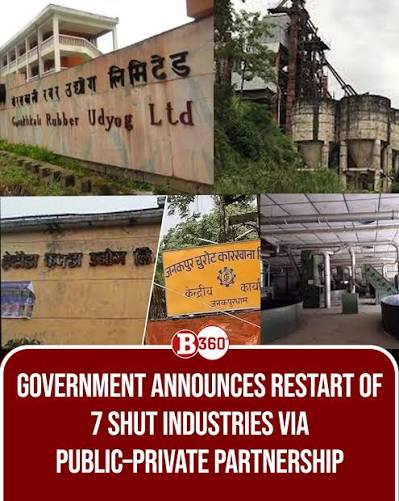
I had been thinking about the proposal to reopen Nepal’s closed industries for some time, but I hesitated to speak publicly after seeing the emotional reactions of many Ranstriya Swontantra Party (RSP) supporters on social networking sites. For many of them, reopening a factory appeared to represent patriotism, national pride, self reliance, employment, and the rejection of previous governments. Questioning its practicality could easily be interpreted as opposition to Nepal or to political change.

My hesitation did not come from a lack of opinion. I was concerned that an economic question would be reduced to a test of political loyalty. After reading Prime Minister Balen Shah’s status and listening to Gagan Thapa’s video response, I felt that the subject deserved a wider and more practical discussion.

The promise to reopen closed industries is politically attractive. It evokes employment, national pride, and the belief that Nepal should produce more of what it consumes. It also creates a powerful political contrast. Previous governments allowed national industries to collapse, the argument goes, while a new government will bring them back to life.

The emotional appeal is understandable. Yet popularity and practicality are not the same thing.

If an industry operated at a loss for years and eventually closed, it cannot be revived merely through patriotism, good intentions, or the determination of a new government. A closed factory is not simply a sleeping giant waiting to be awakened. It may be the result of outdated technology, weak management, excessive staffing, political interference, high debt, poor procurement, an unsuitable market, or a business model that no longer works.

Before asking when an industry should reopen, we should first ask why it closed.

Balen Shah’s status presents several public institutions as examples of early improvement. He refers to increased sales and reported profit at Nepal Drugs Limited, higher sales and reduced arrears at the Dairy Development Corporation, increased revenue and seat occupancy at Nepal Airlines, test production at Hetauda Textile Industry, and increased production at Singha Durbar Baidhyakhana.

These developments may be encouraging. If a public institution has improved production, collected more revenue, met quality standards, or paid farmers more regularly, those results deserve recognition. But an encouraging sign is not the same as a successful business. Increased sales do not necessarily mean increased profit. Higher revenue does not necessarily mean lower debt. Beginning production does not mean that a sustainable market has been secured.

This is the main point raised by Gagan Thapa. His criticism may contain political calculation, but the economic questions he raises are important. If the Dairy Development Corporation reduced its outstanding payments to farmers, did it do so through operating profits, or did the Ministry of Finance provide additional money? If daily sales increased from Rs. 60 lakh to Rs. 90 lakh, how much did the costs of milk procurement, wages, transport, interest, maintenance, administration, and distribution increase?

The response from RSP lawmaker Rajib Khatri illustrates the confusion. He argued that if sales increased by Rs. 30 lakh and the profit was only one rupee per litre, the additional profit would be Rs. 30 lakh. But the reported figures refer to sales revenue, not the number of litres sold. Without knowing the additional quantity and the actual net margin, his calculation cannot establish that profit increased by Rs. 30 lakh. This is not a question of being against industry. It is a basic question of accounting.

The personal attacks surrounding this debate are equally unhelpful. Some people defend Gagan Thapa by referring to his political history, imprisonment, education, and contribution to democracy. Others defend the RSP government by accusing its critics of jealousy or hostility to national industries. A person’s political history does not automatically make every economic argument correct. Similarly, a new political party is not automatically right simply because it emerged from public dissatisfaction with the old parties.

Public institutions should be judged through audited accounts, net profit, debt, subsidies, productivity, and long term performance. The debate should move away from personal insults and return to evidence.

There is another danger that deserves greater attention. Reopening public industries may once again turn them into employment centres for party cadres, relatives, and political loyalists. This has been a problem under successive governments since the restoration of democracy. The Nepali Congress, UML, and Maoist governments all contributed to a political culture in which public institutions could be used to reward supporters.

I have seen friends appointed as general managers of industries during the governments of political parties with which they were affiliated. Some later moved to the United States or Canada and worked in occupations completely unrelated to industrial management. This is not an attack on those individuals. It is a criticism of a system that placed political connection above professional competence.

The RSP emerged by criticizing this culture of patronage. That is why its conduct should be examined carefully. A new party should not reproduce the old practices while using a different language. Changing the party in power does not automatically change the system. If reopened industries are filled with cadres and relatives instead of qualified engineers, managers, technicians, and accountants, they will soon reproduce the same inefficiency and losses.

Gagan Thapa’s broader point also deserves consideration. The government’s primary responsibility is to create a fair business environment, regulate markets, protect the public interest, and support strategically important sectors. It does not necessarily have to operate every commercial factory, airline, textile mill, or trading institution. Essential medicines, food security, emergency supply, and national resilience may justify public ownership. Ordinary commercial production should generally be managed by professional and accountable businesses, whether public, private, or operated through genuine partnerships.

Nepal does not have to choose between reopening every closed factory and selling every public enterprise. Each institution should be evaluated separately. Some may be strategically important. Some may become viable after restructuring. Some may be better operated through public private partnerships. Others may be beyond repair and should be closed in an orderly manner.

For every institution, the government should publish a clear plan explaining its purpose, required investment, market, production costs, staffing, debt, subsidy, management structure, and performance targets. Recruitment must be open and competitive. Senior appointments should be based on qualifications and experience, not political loyalty.

Patriotism does not mean reopening an old factory regardless of cost. Patriotism means using public money carefully and honestly. If a closed industry can become competitive through new technology, capable management, a clear market, and transparent financial planning, it deserves an opportunity. But a flag, a ceremony, and a photograph of a factory floor cannot make an industry viable.

A factory needs customers, productivity, quality, discipline, competent management, and accountability. Reopening a closed industry may be a meaningful policy. Reopening a failed business model and filling it with political appointees is not economic nationalism. It is simply repeating the past with a new slogan.

Canada’s Housing Market Is Unfair, Not Broken

Dr. Rajendra K Panthee

Canada’s housing crisis is usually described as a problem of supply and demand. Build more homes, the argument goes, and prices will eventually come down. That explanation contains some truth, but it also hides a deeper reality that Cara Stern brings out in her conversation with mortgage expert Ron Butler. Canada’s housing crisis is not only about supply. It is about fairness.

The question is no longer simply why houses are expensive. The more important question is why the rules of homeownership have changed so dramatically for one generation while remaining so favorable for another.

A society cannot remain healthy when people working full time, including teachers, nurses, grocery store managers, engineers, and young professionals, can no longer afford to live in the communities they serve. Housing is more than a commodity or an investment. It is the base on which people build families, careers, communities, and a sense of belonging.

Listening to Stern and Butler, one realizes that the conversation is not really about mortgages or real estate. It is about how decades of public policy have quietly reshaped the Canadian dream.

From Ordinary to Unreachable

Ron Butler recalls entering the mortgage industry more than three decades ago when an assistant grocery store manager and a registered nurse could regularly purchase a home in the Greater Toronto Area with a modest down payment. Home prices generally ranged between two and a half and three and a half times a household’s annual income.

Today, in many Canadian cities, particularly Toronto and Vancouver, home prices have reached seven, eight, or even twelve times household income.

That is not just inflation. It is a complete redefinition of adulthood.

For previous generations, buying a home was a realistic milestone reached through employment and savings. For many young Canadians today, homeownership increasingly depends on inherited wealth, parental support, or the willingness to take on decades of crushing debt.

We are told this is progress. It is not. It is a narrowing of social mobility dressed up as a normal market adjustment.

The Myth of Equal Effort

One of the strongest points Stern makes is that acknowledging generational inequality does not diminish the hard work of previous generations.

Many older Canadians respond, quite understandably, by saying, “We worked hard too.”

No one seriously disputes that. The issue is not effort. The issue is whether equal effort still produces equal opportunity.

A young couple earning above the national median income, saving diligently, avoiding extravagance, and making responsible choices can still find themselves priced out of family sized housing. If financially responsible households cannot buy modest homes, the problem cannot be reduced to budgeting discipline or lifestyle choices.

It becomes structural.

Stern speaks from experience. She and her husband were earning above the median household income, living frugally, and saving consistently. Yet they still found themselves unable to purchase even very small homes that could accommodate the family they hoped to build.

That frustration eventually became professional curiosity. Instead of accepting the situation as inevitable, she began asking why the housing market seemed so detached from ordinary incomes. That inquiry led her into housing journalism.

Housing Is a Policy Choice

Perhaps the most important insight in the conversation is Stern’s insistence that today’s housing crisis did not simply happen. It was created through policy.

Too often Canadians speak about housing affordability as though it were a force of nature. It is not.

Governments make decisions about zoning regulations. Governments determine development charges. Governments decide how municipalities finance infrastructure. Governments establish tax systems. Governments regulate land use. Governments shape immigration targets. Governments influence mortgage rules.

Every one of those choices affects housing affordability.

In Stern’s words, the economy is a series of choices.

That changes the whole conversation. If policy helped create the crisis, policy can also help solve it. The challenge is not mainly technical. It is political.

The trouble is that political courage is usually in short supply when the people most protected by the current system are also the loudest defenders of it.

When Cities Fund Themselves Through Housing

One of Butler’s strongest criticisms concerns the enormous rise in municipal development charges.

Municipal governments need revenue, but they do not want to anger existing homeowners by raising property taxes. So instead, they shift infrastructure costs onto new housing developments. The logic is obvious. Existing voters stay happy. Future homeowners pay the bill.

It is a neat trick, and it has been repeated often enough to become normal.

Of course, developers do not absorb these costs forever. They pass them on to buyers. So development charges that were once relatively modest have grown dramatically over the past two decades, adding tens of thousands and sometimes hundreds of thousands of dollars to the price of newly built homes.

The result is perverse. Policies sold as responsible municipal planning end up making homeownership harder for the very people trying to enter the market.

In other words, younger Canadians are paying twice. They pay through high housing prices and again through the financing mechanisms hidden inside those prices.

The Missing Middle

Another major theme in the conversation is Canada’s obsession with building either detached suburban homes or very small condominiums.

What has largely disappeared is what urban planners call the missing middle. Duplexes, triplexes, fourplexes, courtyard apartments, townhouses, and other family sized medium density housing have been squeezed out by zoning rules and planning habits that no longer serve the reality of modern cities.

These forms of housing once allowed neighbourhoods to grow gradually while remaining affordable. Today many municipalities continue to restrict them through rules inherited from another era, as though the car oriented suburbs of the mid 20th century should still dictate how a 21st century city must function.

The result is predictable. Developers either build luxury detached homes where land is available or maximize profit by producing tiny condominium units in expensive urban locations.

Families searching for modest three bedroom homes find very few choices.

Canada has become increasingly successful at producing housing units while becoming less successful at producing homes that ordinary families can actually use. Those are not the same thing.

Counting units tells us little if families cannot live in them.

What Housing Really Means

Perhaps the most affecting part of Stern’s interview is her own plain and deeply human wish.

She does not dream of luxury. She wants what previous generations often treated as ordinary. A stable home. A neighbourhood. Children attending the same school. Some freedom from the anxiety that a landlord may decide to sell and uproot the family.

That should not sound radical. Yet in today’s Canada, even basic stability can sound like a privilege.

Housing shapes far more than the real estate market. It shapes whether people marry, whether they have children, whether they stay in a city, whether they volunteer, whether they build roots, and whether they imagine a future at all.

A country that makes stable housing inaccessible is not just creating a housing problem. It is weakening its own social future.

A Fairness Crisis

The housing debate is usually framed as a contest between homeowners and renters, developers and environmentalists, cities and provinces, or supply advocates and affordability advocates.

Cara Stern’s conversation with Ron Butler suggests a better framework. The central question is fairness.

Can a young Canadian working full time reasonably expect to own a modest home. Can ordinary families remain in the cities where they grew up. Can children afford to live near their parents. Can essential workers afford to live where they work.

If the answer increasingly becomes no, then Canada faces more than a housing shortage. It faces a fairness crisis.

Fixing that will require more than adding units. It will require rebuilding a system that once allowed ordinary work to produce ordinary dreams.

Until that happens, Canada’s housing market will remain not only expensive, but fundamentally unfair.

Stunt Cannot Govern a Nation

Dr. Rajendra K Panthee

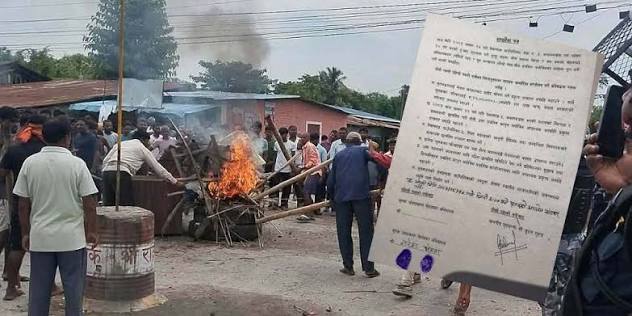
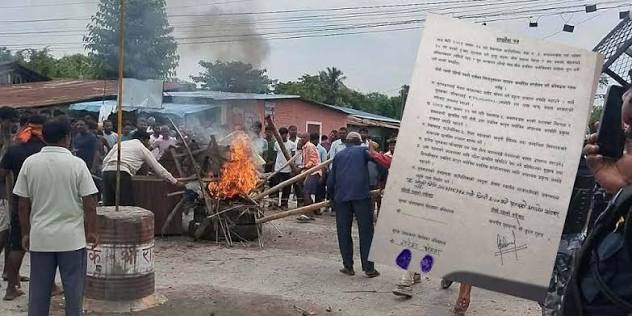
My heart goes out to the families who have lost loved ones and to all those who have been injured or left frightened by the recent violence. As someone who loves this motherland deeply, it is painful to watch our society go through such tense and uncertain days. In moments like this, the first duty of every responsible citizen is to mourn, to listen, and to hope for peace.

Even if this is not the time to blame others, it is still the time to reflect. If we truly care about Nepal, then we must stop pretending that slogans, public stunts, or social media energy are enough to govern a country. When crisis arrives, it is not style that matters. It is judgment, coordination, restraint, and trust.

This is where my concern begins. Many RSP supporters may want to read the recent violence as an old-party conspiracy to make the new force fail. I do not see it that way. The old parties, for all their corruption and failures, understand Nepal’s political reality far better than RSP does. They know the terrain, the actors, the fault lines, and the habits of our society. That does not make them good. But it does make them experienced. And experience matters when a country is under strain.

RSP entered politics with the promise of freshness and change. That was its strength. But governing a country is a different responsibility altogether. A party can rise on frustration, anger, and charisma. But it cannot govern on those alone. When violence broke out, the need was not for a stunt or a slogan. The need was for immediate contact, coordination, trust-building, and political maturity. That is why an all-party meeting became necessary. That is why leadership is tested not in victory speeches, but in moments of fear.

This is also where my earlier idea of The Richmen’s Club that Nepal Never Had becomes relevant. If some political leaders came into politics after earning money and success, then they should have brought with them seriousness, discipline, and a sense of public responsibility. They should have built a culture of competence, not just confidence. They should have understood that managing a country is harder than winning applause.

I say this with sadness, not arrogance. I do not want Nepal to fail in order to prove a point. I want Nepal to grow out of the habit of mistaking performance for leadership. A country cannot be governed by stunts. It cannot be protected by slogans alone. And it cannot survive repeated crises if its leaders are still learning the basics of political adulthood.

Even if this is not the time to blame others, it is certainly the time to learn from what has happened. Nepal needs leaders who can feel deeply, think clearly, and govern responsibly.

Stunt Cannot Govern a Country! (स्टन्टले देश चल्दैन!)

Dr. Rajendra K Panthee

Picture Credit The Rising Nepal

हालैका हिंसात्मक घटनामा ज्यान गुमाउने सबैप्रति हार्दिक श्रद्धाञ्जली व्यक्त गर्दछु। घाइते हुनुहुनेहरू, त्रास र असुरक्षाबीच बाँच्न बाध्य भएका परिवारहरू तथा प्रभावित सबैप्रति गहिरो समवेदना व्यक्त गर्दछु। यो मातृभूमिलाई गहिरो माया गर्ने नागरिकका रूपमा यस्ता पीडादायी र तनावपूर्ण दिनहरू देख्नु अत्यन्त दुःखद छ। यस्ता संवेदनशील घडीमा जिम्मेवार नागरिकको पहिलो कर्तव्य शोक मनाउनु, एकअर्काको कुरा सुन्नु र शान्तिको कामना गर्नु हो।

सायद अहिले दोषारोपण गर्ने समय होइन। तर आत्मचिन्तन गर्ने समय भने अवश्य हो। यदि हामी साँच्चिकै नेपाललाई माया गर्छौं भने एउटा भ्रमबाट बाहिर निस्कनुपर्छ—नारा, सार्वजनिक स्टन्ट वा सामाजिक सञ्जालको लोकप्रियताले मात्र देश चल्दैन। संकटको बेला शैली होइन, विवेक चाहिन्छ। समन्वय चाहिन्छ। संयम चाहिन्छ। र सबैभन्दा महत्त्वपूर्ण कुरा, जनविश्वास चाहिन्छ।

केहीले हालको हिंसालाई नयाँ राजनीतिक शक्तिलाई असफल देखाउन गरिएको षड्यन्त्रका रूपमा व्याख्या गर्ने प्रयास गर्न सक्छन्। म त्यसरी हेर्दिनँ। पुराना राजनीतिक दलहरूमा भ्रष्टाचार, कमजोरी र असफलताका अनेक अध्याय छन्, त्यो अस्वीकार गर्न सकिँदैन। तर उनीहरूले नेपालको राजनीतिक यथार्थलाई नयाँ शक्तिहरूले भन्दा धेरै लामो समयदेखि भोगेका, बुझेका र सामना गरेका छन्। उनीहरूलाई देशको सामाजिक संरचना, राजनीतिक संवेदनशीलता, शक्ति–सन्तुलन र द्वन्द्वका रेखाहरूको अनुभव छ। यसले उनीहरूलाई आदर्श बनाउँदैन, तर अनुभवी भने अवश्य बनाउँछ। र संकटको समयमा अनुभवको महत्त्व असाधारण हुन्छ।

परिवर्तनको वाचा गर्दै नयाँ राजनीतिक शक्ति उदाउनु आफैंमा सकारात्मक कुरा हो। तर परिवर्तनको नारा दिनु र एउटा देश सञ्चालन गर्नु एउटै कुरा होइन। कुनै दल जनताको असन्तुष्टि, आक्रोश र करिश्माका आधारमा लोकप्रिय बन्न सक्छ। तर त्यही आधारमा देश सञ्चालन गर्न सकिँदैन। हिंसा भड्किएको बेला आवश्यक कुरा स्टन्ट वा आकर्षक नारा थिएन। तत्काल संवाद आवश्यक थियो। प्रभावकारी समन्वय आवश्यक थियो। विश्वास निर्माण आवश्यक थियो। र सबैभन्दा बढी राजनीतिक परिपक्वता आवश्यक थियो। त्यसैले सर्वदलीय बैठकको आवश्यकता महसुस भयो। नेतृत्वको वास्तविक परीक्षा विजय भाषणमा होइन, संकट र त्रासको घडीमा हुन्छ।

यही प्रसङ्गमा मैले पहिले उठाएको “नेपालले कहिल्यै नपाएको रिचमेन्स क्लब” भन्ने विचार पनि सान्दर्भिक लाग्छ। यदि केही नेताहरू आर्थिक रूपमा सफल जीवन बिताएर राजनीतिमा आएका हुन् भने, उनीहरूले आफ्नो सफलतासँगै गम्भीरता, अनुशासन, संस्थागत सोच र सार्वजनिक उत्तरदायित्व पनि ल्याउनुपर्ने थियो। उनीहरूले केवल आत्मविश्वासको होइन, सक्षम शासन संस्कृतिको निर्माण गर्नुपर्ने थियो। किनभने देश सञ्चालन गर्नु ताली बटुल्नुभन्दा धेरै कठिन काम हो।

यी कुरा म अहंकारले होइन, गहिरो चिन्ताले लेखिरहेको छु। कुनै दल असफल होस् भनेर होइन, नेपाल सफल होस् भनेर। हामीले नेतृत्व र प्रदर्शनबीचको फरक बुझ्न सिक्नुपर्छ। लोकप्रियता र शासन क्षमता एउटै कुरा होइनन्। स्टन्टले देश चल्दैन। नाराले मात्र राष्ट्र सुरक्षित हुँदैन। र यदि हरेक संकटसँगै नेतृत्वले शासनका आधारभूत पाठ सिकिरहनुपर्ने अवस्था रहिरह्यो भने, देशले बारम्बार ठूलो मूल्य चुकाइरहनुपर्नेछ।

सायद अहिले दोषारोपण गर्ने समय होइन। तर अहिले भएका घटनाबाट सिक्ने समय भने पक्कै हो। नेपाललाई यस्ता नेताहरू चाहिन्छ, जसले नागरिकको पीडा गहिरोसँग महसुस गर्न सकून्, परिस्थितिलाई स्पष्ट रूपमा बुझ्न सकून्, र जिम्मेवारीपूर्वक शासन गर्न सकून्। आखिर, देशलाई स्टन्टले होइन, दूरदृष्टि, विवेक, संस्थागत क्षमता र उत्तरदायी नेतृत्वले अघि बढाउँछ।