
Dr. Rajendra K Panthee
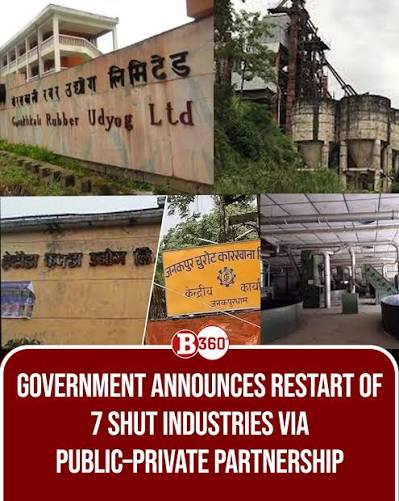
I had been thinking about the proposal to reopen Nepal’s closed industries for some time, but I hesitated to speak publicly after seeing the emotional reactions of many Ranstriya Swontantra Party (RSP) supporters on social networking sites. For many of them, reopening a factory appeared to represent patriotism, national pride, self reliance, employment, and the rejection of previous governments. Questioning its practicality could easily be interpreted as opposition to Nepal or to political change.
My hesitation did not come from a lack of opinion. I was concerned that an economic question would be reduced to a test of political loyalty. After reading Prime Minister Balen Shah’s status and listening to Gagan Thapa’s video response, I felt that the subject deserved a wider and more practical discussion.
The promise to reopen closed industries is politically attractive. It evokes employment, national pride, and the belief that Nepal should produce more of what it consumes. It also creates a powerful political contrast. Previous governments allowed national industries to collapse, the argument goes, while a new government will bring them back to life.
The emotional appeal is understandable. Yet popularity and practicality are not the same thing.
If an industry operated at a loss for years and eventually closed, it cannot be revived merely through patriotism, good intentions, or the determination of a new government. A closed factory is not simply a sleeping giant waiting to be awakened. It may be the result of outdated technology, weak management, excessive staffing, political interference, high debt, poor procurement, an unsuitable market, or a business model that no longer works.
Before asking when an industry should reopen, we should first ask why it closed.
Balen Shah’s status presents several public institutions as examples of early improvement. He refers to increased sales and reported profit at Nepal Drugs Limited, higher sales and reduced arrears at the Dairy Development Corporation, increased revenue and seat occupancy at Nepal Airlines, test production at Hetauda Textile Industry, and increased production at Singha Durbar Baidhyakhana.
These developments may be encouraging. If a public institution has improved production, collected more revenue, met quality standards, or paid farmers more regularly, those results deserve recognition. But an encouraging sign is not the same as a successful business. Increased sales do not necessarily mean increased profit. Higher revenue does not necessarily mean lower debt. Beginning production does not mean that a sustainable market has been secured.
This is the main point raised by Gagan Thapa. His criticism may contain political calculation, but the economic questions he raises are important. If the Dairy Development Corporation reduced its outstanding payments to farmers, did it do so through operating profits, or did the Ministry of Finance provide additional money? If daily sales increased from Rs. 60 lakh to Rs. 90 lakh, how much did the costs of milk procurement, wages, transport, interest, maintenance, administration, and distribution increase?
The response from RSP lawmaker Rajib Khatri illustrates the confusion. He argued that if sales increased by Rs. 30 lakh and the profit was only one rupee per litre, the additional profit would be Rs. 30 lakh. But the reported figures refer to sales revenue, not the number of litres sold. Without knowing the additional quantity and the actual net margin, his calculation cannot establish that profit increased by Rs. 30 lakh. This is not a question of being against industry. It is a basic question of accounting.
The personal attacks surrounding this debate are equally unhelpful. Some people defend Gagan Thapa by referring to his political history, imprisonment, education, and contribution to democracy. Others defend the RSP government by accusing its critics of jealousy or hostility to national industries. A person’s political history does not automatically make every economic argument correct. Similarly, a new political party is not automatically right simply because it emerged from public dissatisfaction with the old parties.
Public institutions should be judged through audited accounts, net profit, debt, subsidies, productivity, and long term performance. The debate should move away from personal insults and return to evidence.
There is another danger that deserves greater attention. Reopening public industries may once again turn them into employment centres for party cadres, relatives, and political loyalists. This has been a problem under successive governments since the restoration of democracy. The Nepali Congress, UML, and Maoist governments all contributed to a political culture in which public institutions could be used to reward supporters.
I have seen friends appointed as general managers of industries during the governments of political parties with which they were affiliated. Some later moved to the United States or Canada and worked in occupations completely unrelated to industrial management. This is not an attack on those individuals. It is a criticism of a system that placed political connection above professional competence.
The RSP emerged by criticizing this culture of patronage. That is why its conduct should be examined carefully. A new party should not reproduce the old practices while using a different language. Changing the party in power does not automatically change the system. If reopened industries are filled with cadres and relatives instead of qualified engineers, managers, technicians, and accountants, they will soon reproduce the same inefficiency and losses.
Gagan Thapa’s broader point also deserves consideration. The government’s primary responsibility is to create a fair business environment, regulate markets, protect the public interest, and support strategically important sectors. It does not necessarily have to operate every commercial factory, airline, textile mill, or trading institution. Essential medicines, food security, emergency supply, and national resilience may justify public ownership. Ordinary commercial production should generally be managed by professional and accountable businesses, whether public, private, or operated through genuine partnerships.
Nepal does not have to choose between reopening every closed factory and selling every public enterprise. Each institution should be evaluated separately. Some may be strategically important. Some may become viable after restructuring. Some may be better operated through public private partnerships. Others may be beyond repair and should be closed in an orderly manner.
For every institution, the government should publish a clear plan explaining its purpose, required investment, market, production costs, staffing, debt, subsidy, management structure, and performance targets. Recruitment must be open and competitive. Senior appointments should be based on qualifications and experience, not political loyalty.
Patriotism does not mean reopening an old factory regardless of cost. Patriotism means using public money carefully and honestly. If a closed industry can become competitive through new technology, capable management, a clear market, and transparent financial planning, it deserves an opportunity. But a flag, a ceremony, and a photograph of a factory floor cannot make an industry viable.
A factory needs customers, productivity, quality, discipline, competent management, and accountability. Reopening a closed industry may be a meaningful policy. Reopening a failed business model and filling it with political appointees is not economic nationalism. It is simply repeating the past with a new slogan.
