
Dr. Rajendra K Panthee
Buying a condo in Ontario means more than owning a unit. It also means becoming part of a condominium corporation—a shared organization responsible for building maintenance, common expenses, reserve funds, insurance, contracts, utilities, and compliance with provincial law.
When a condo corporation is well managed, owners may not think much about governance. But when boards, property managers, or financial controls fail, the effects can be serious: higher fees, sudden special assessments, delayed repairs, unpaid bills, service disruptions, and uncertainty for owners and tenants.
What owners are concerned about
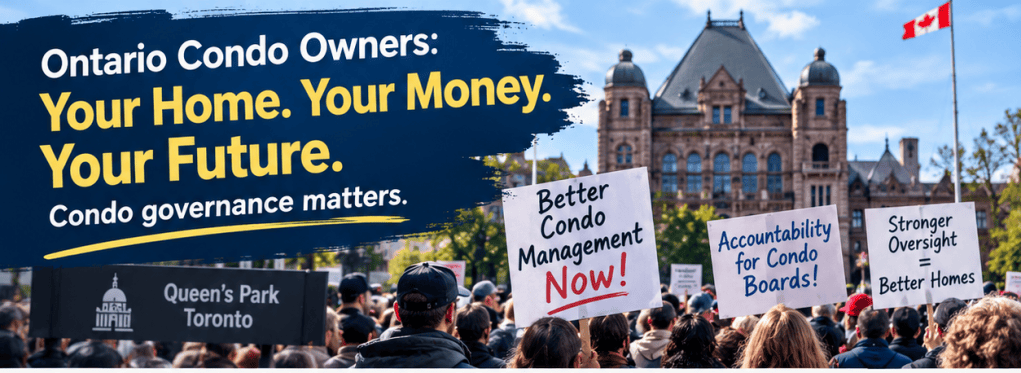
Condo owners recently gathered at Queen’s Park to call for stronger accountability and reform in how condo boards operate. Their concerns include fairer board elections, transparency, independent oversight of voting, better access to information, and stronger legal protections for owners.
The issue is not that every board or property manager is failing. Many condo corporations are run responsibly. The concern is that owners need reliable safeguards when governance goes wrong—because they are the ones who ultimately pay for the building’s problems.
The financial risk
Condo fees fund daily operations and contributions to the reserve fund. The reserve fund is intended to cover major repairs and replacements, such as roofs, windows, elevators, mechanical systems, and parking structures.
If a corporation does not plan properly, delays repairs, or faces unexpected costs, owners may be charged a special assessment. This is an extra payment beyond regular condo fees. In serious cases, it can place significant financial pressure on owners who are already paying mortgages, taxes, insurance, and monthly fees.
Owners should also understand that unpaid valid common-expense charges can lead to a lien on a unit, along with interest and legal costs. If an owner believes a charge is improper, the better approach is to request records, ask questions, and use formal dispute processes.
Management failures affect daily life
Recent reporting about SIREG Management showed how a property-management failure can affect owners across multiple buildings. SIREG managed about 1,800 condo units in Ontario. The company reported liquidity challenges and told investor-owners that rental payments could no longer be guaranteed. Ontario’s condo-management regulator suspended its licence and opened an investigation.
For investor-owners, this created concerns about missed rental income and mortgage payments. For residents, it raised questions about maintenance, building services, and utility payments. Reports from affected buildings included concerns about unpaid utility bills and possible service interruptions.
These cases show that a problem at the corporate or management level can quickly become a personal financial and living-condition problem for owners and tenants.
What owners can do
Owners can protect themselves by staying informed:
- Review the budget, financial statements, reserve-fund study, and reserve-fund plan.
- Ask about unpaid bills, lawsuits, insurance issues, and planned major repairs.
- Attend annual general meetings and read board minutes.
- Keep copies of notices, financial documents, and correspondence.
- Vote in board elections and encourage neighbours to participate.
- Ask how contracts and property-management services are being overseen.
For buyers, a low condo fee is not automatically a good sign. It is important to check whether the reserve fund is adequate and whether repairs have been postponed.
The bottom line
A condo is both a home and a shared business. Good governance protects owners’ investments and quality of life. Weak governance can create costs, disruptions, and long-term uncertainty.
Ontario condo owners should ask questions, review documents, attend meetings, vote, and expect transparency from those who manage their buildings.
Discover more from Toronto Realty and Rhetoric
Subscribe to get the latest posts sent to your email.
