
Dr. Rajendra K Panthee
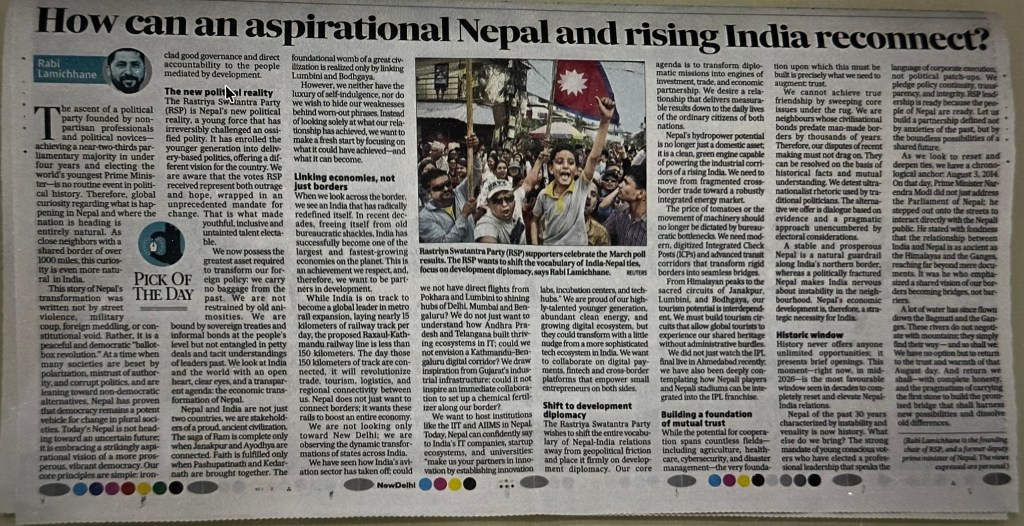
I started reading Rabi Lamichhane’s article “How can an aspirational Nepal and rising India reconnect?” in Hindustan Times and felt compelled to share some thoughts on how we remember Nepal’s recent political transformation.
The article frames Nepal’s transformation as a “peaceful ballot-box revolution” focused on development and aspirational vision. However, the historical record shows that the 2026 election was called because of the September 2025 Gen Z protests, which resulted in:
- 19 people killed when police opened fire on protesters
- Over 300 injured with tear gas, rubber bullets, and live ammunition
- Parliament building damaged during the protests
- $21 billion in damage — half of Nepal’s annual GDP
- School kids in uniforms brought to the streets
More than 800,000 new voters registered—two-thirds of them Gen Z. The movement wasn’t about RSP specifically; it was about accountability, anti-corruption, and demanding a political system that serves ordinary citizens. The 2/3 RSP majority we see today is a direct result of this Gen Z movement.
When the article describes this as a “peaceful ballot-box revolution,” it risks erasing the young people who died to make this election possible. The families of the martyrs deserve to be acknowledged in any narrative about Nepal’s transformation.
On border relations, the article’s call to “resolve disputes through dialogue” is constructive, especially after PM Balen’s recent parliamentary remarks on border encroachment sparked debate. What would strengthen Nepal-India ties is not just aspirational vision but transparent governance, accountability for all parties, and respect for democratic institutions.
The warm reception Rabi received in India reflects genuine interest in Nepal-India cooperation, which should be welcomed. However, for that cooperation to be sustainable, both countries need leaders who balance diplomatic engagement with domestic accountability.
When RSP’s 2/3 majority enables governance, it also brings responsibility to ensure that power serves all citizens, not just party interests. True reconnection between Nepal and India will come not from rewriting history, but from building relationships grounded in mutual respect, transparency, and honoring the Gen Z generation whose uprising made this new political moment possible.
We should all remember: accountability today strengthens democracy tomorrow.
Discover more from Toronto Realty and Rhetoric
Subscribe to get the latest posts sent to your email.
