The Power and Danger of Silence: A Cross-Cultural Perspective on Importance of Voice Over Silence

Eastern vs. Western Rhetoric: The Value of Silence vs. Voice

Growing up in Nepal, I was taught that silence was a virtue. Questioning authority—whether parents, teachers, or bosses—was seen as disrespectful, rebellious, or even dangerous. Knowledge was often treated as absolute, handed down by elders, religious texts, or societal norms. To challenge it was to invite suspicion.

This cultural conditioning creates a society where conformity is rewarded and dissent is suppressed. The danger? A single, unchallenged “truth” dominates, leaving no room for dialogue or growth. As James Berlin’s socio-epistemic rhetoric suggests, knowledge is not absolute but socially constructed through exchange and debate. Yet, in many Eastern traditions, questioning is discouraged, and those who speak up—like me myself and Punya Sagar Marahatta and a few others—are labeled as troublemakers.

In Western rhetoric, however, silence is often viewed with suspicion. Leaders are expected to articulate their positions—when they don’t, they are criticized for hiding their true intentions. When Mark Carney, the future potential Canadian Prime Minister, briefly left the election campaign trail for the third time recently to return to Ottawa and discuss Donald Trump’s proposed tariffs with other world leaders, the move was interpreted with deep significance. Yves-François Blanchet, leader of the Bloc Québécois, seized on Carney’s absence, accusing him of hiding from public scrutiny. Blanchet’s implication was clear: Carney preferred conducting high-stakes negotiations behind closed doors rather than engaging openly with voters.

But this distrust of silence extends beyond politics: in workplaces, employees who don’t speak up in meetings are seen as disengaged; in classrooms, quiet students risk being overlooked; and in social circles, prolonged silence is often misinterpreted as disapproval or disconnection. The Western ideal of participatory democracy and open discourse leaves little room for comfortable silence—it demands vocal engagement as proof of presence and commitment.

But is silence always negative? Cheryl Glenn’s Silence: A Rhetorical Art argues that silence can be more powerful than speech. The Romantic poet John Keats wrote, “Heard melodies are sweet, but those unheard are sweeter.” There is profound meaning in silence—but also danger.

The Double-Standard of Silent Disapproval

When I write about Nepali community issues—whether real estate exploitation, political hypocrisy, or unethical business practices—many agree privately but fear public association. After I wrote about Bijay Paudel’s Conservative Party alignment, some applauded me in private messages but hesitated to talk about it publicly. They feared backlash, revealing a deep cultural reluctance to openly dissent.

This silence is deceptive. Those who remain quiet while privately disapproving are more dangerous than outspoken critics. At least with critics, you know where they stand. But silent dissenters maintain a façade of loyalty while nurturing resentment. For example, let’s take an example of Nepali community members’ support for Bijay Paudel this Canadian Federal Election. Bijay likely interprets the photo-ops and crowded campaign office as genuine support, unaware how many attend just for free food, social clout, or fear of being seen as “disloyal” to the community’s perceived unity. The tragedy isn’t just the hypocrisy, but how this culture of performative allegiance silences meaningful debate about whether supporting any Nepali candidate—regardless of their politics or integrity—truly serves our collective interests.

The Cost of Being Truth-Tellers

Looks like Punya Sagar and I are often labeled as “disruptive” or “controversial” because we refuse to stay silent. Whether exposing fake refugee schemes, diploma mill exploitations, community and political hypocrisy, exploitation of community sentiments for business, and wrong real estate practices, we bring these issues into the open—not to divide, but to spark necessary conversations. At minimum, we strive to make our community aware of practices that ultimately harm us all. Yet when we ask these difficult questions, why are we so often treated as adversaries rather than allies in progress?

The answer lies in a painful truth: unhealthy communities mistake harmony for health. They prioritize the illusion of unity over accountability. But a society that grows stronger does so through open dialogue, not enforced silence. The real obstacle to progress isn’t those who speak up—it’s those who privately acknowledge problems yet publicly remain quiet, allowing harmful norms to persist through their inaction.

Why Our Community Needs More Than Silent Support

In our community’s ongoing journey toward meaningful change, writing stands as one of our most transformative tools – capable not only of critiquing but also of healing and reshaping perspectives. This realization became especially clear to me when Chitra Pradhan responded to a comment on Punya Sagar’s post about Prashanta Dhakal that had dismissed the value of writing. While some contended that financial support for Nepali candidates was more immediately important, Chitra eloquently articulated writing’s unique power: its capacity to preserve truths, alter viewpoints, effect change that outlasts election cycles, and offer alternative perspectives (a favorite concept of Chitra) on social and communal matters.

These alternative perspectives serve as crucial instruments for dismantling the idea of a singular truth in our era of multiple, coexisting truths. They help individuals understand that their personal truths may not align with others’ realities. Truth’s multiplicity encompasses whose truth we’re considering, when it applies, where it’s valid, and how it comes to be accepted as truth.

This cultural shift, though gradual, is unmistakable. Increasing numbers of community members are now engaging in this collective knowledge-building. Punya Sagar’s Facebook posts, for instance, regularly spark active discussions among Nepalis both in Canada and worldwide. Punya himself and Chitra Pradhan stand out as particularly engaged contributors to these dialogues. Observing this evolution fills me with hope. Through my own extensive writing about our community’s social, cultural and political challenges, I’ve witnessed writing’s unique capacity to ignite conversations that years of silent conformity failed to produce. Writing does more than reveal problems – it sows the seeds for their resolution.

Conclusion: Breaking the Culture of Silence

Silence can be powerful—but when misused, it becomes a tool of oppression. My cross-cultural experience has taught me that those who speak, despite backlash, are not the true threats. The real threats are the ones who nod in agreement publicly but whisper criticisms in the dark.

It’s time to move beyond fear. Whether in Eastern or Western contexts, progress demands voices that challenge, question, and refuse to conform. Because in the end, unspoken truths are far more dangerous than the ones we dare to say aloud.

Please know that Silence isn’t peace—it’s postponed conflict. From kitchen tables to boardrooms, the unspoken tensions we ignore today become the ruptures we can’t mend tomorrow. The choice isn’t between harmony and chaos, but between honest dialogue and collective dysfunction.

The Story Behind My Profile Picture: A Reflection on Identity, Authenticity, and Oddities 

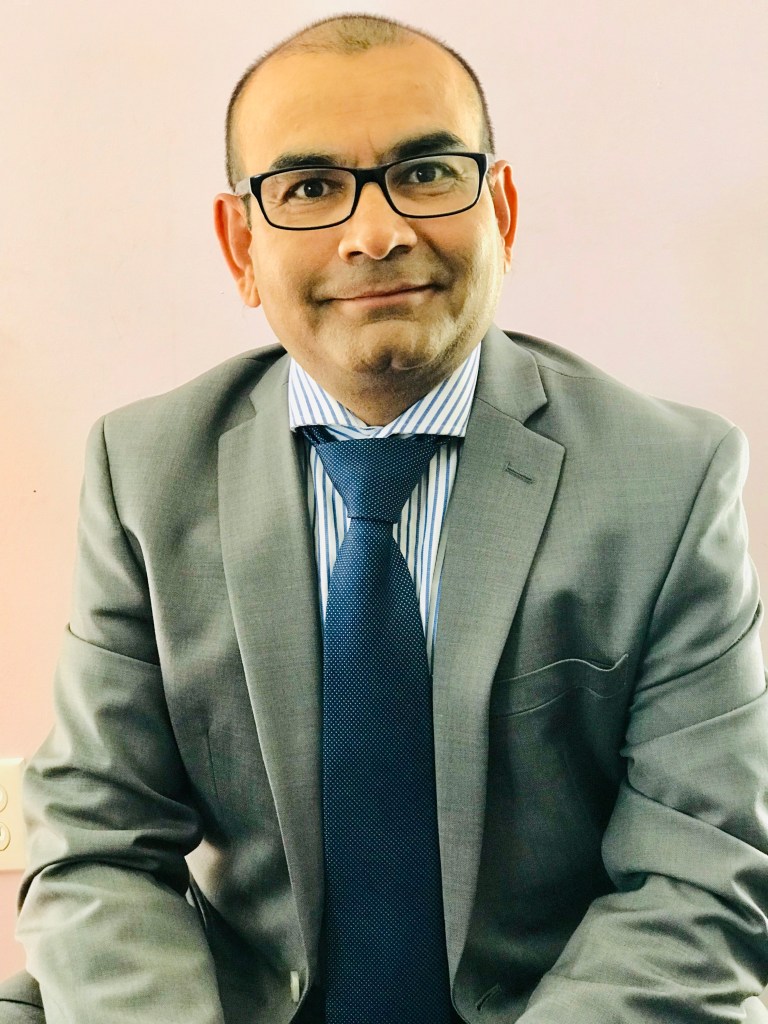
As a professor who teaches writing courses—whether first-year composition, technical writing, or professional writing—I place a strong emphasis on genre and genre analysis. Genres, after all, are not just types of texts; they are dynamic responses to social and communicative needs. They shape how we interact with the world, from sending a text message to writing an email to a boss, from Instagramming to expressing grief at a funeral. Each genre reflects social hierarchies, historical contexts, technological advancements, and cultural norms. My Facebook profile picture, an artifact that might seem simple at first glance, is a perfect example of how genres and artifacts can encapsulate personal, social, economic, and even political dimensions of our lives.

The Oddities That Make It Perfect

Let’s start with the oddities. This picture was taken at home by my children, not in a studio by a professional photographer. The lighting isn’t perfect, the background is my living room, and my height—something I’ve always been conscious of—is unmistakably visible. At times, I’ve felt the urge to change it. Friends have suggested, more than once, that I replace it with something more polished, more “professional.” But every time I consider swapping it out, I stop. Why? Because this picture, with all its imperfections, feels like the truest representation of who I am.

The oddities in the photo are a reflection of my life. I’m a professor at a prestigious university in the U.S. and at a college in Canada, yet I chose to get an Ontario realtor license during the COVID-19 pandemic, a time of global uncertainty. The picture was taken in June 2020, just after I earned my Ontario Real Estate License. It was a moment of professional achievement, but also a moment of personal reflection. I didn’t go to a professional photographer for several reasons: the pandemic restrictions, my financial prudence, and perhaps most importantly, my desire to present myself as both a professional and a down-to-earth person. The result is an image that captures my duality—a scholar and a realtor, a professional and a family man, someone who critiques societal flaws while embracing his own imperfections.

A Response to Social Expectations (Carolyn Miller’s Genre Theory)

Carolyn Miller’s theory of genre as social action helps explain why this picture works. Genres, she argues, are not just templates but responses to recurring social situations. My profile picture responds to the genre of professional headshots, but it also challenges it. Traditionally, a professional headshot is polished, formal, and often impersonal. Mine, on the other hand, is homegrown, authentic, and deeply personal. It reflects the social changes brought about by the pandemic, when many of us had to adapt to new ways of working and presenting ourselves. It also reflects my cultural values as a Nepalese individual—values that emphasize humility, modesty, and resourcefulness.

The picture also responds to the expectations of my dual roles. As a professor, I’m expected to project intellectual authority; as a realtor, I’m expected to be approachable and trustworthy. This image strikes a balance between the two. The suit signals professionalism, while the home setting and the involvement of my children add a touch of warmth and relatability. It’s a visual negotiation of my multifaceted identity.

Why I Can’t Change It

I’ve tried to change this picture many times. I’ve browsed through other photos, considered retaking it, and even experimented with editing tools. But each time, I come back to the same conclusion: there’s no other picture that represents me as fully as this one. Its imperfections are part of its charm. The slightly awkward pose, the homemade quality, the visible height—they all tell a story. They remind me of where I was in June 2020, navigating a global crisis while pursuing a new career. They remind me of my children, who took the photo and are an integral part of my life. They remind me of my values—authenticity, humility, and a willingness to critique societal norms, as I did in my blog post on the dark side of Nepalese cultural entrepreneurship in Canada.

Friends who suggest changing the picture mean well. They want me to present the “best” version of myself. But what they don’t realize is that this is the best version of me—not because it’s flawless, but because it’s real. It captures my priorities, my circumstances, and my identity in a way that no studio photo ever could.

The Significance of Artifacts in Representing Broader Issues

Artifacts like this profile picture are not just personal; they are deeply connected to social, economic, historical, and political contexts. Scholars like Charles Bazerman and Amy Devitt have emphasized how genres and artifacts mediate social interactions and reflect broader cultural and institutional practices. Bazerman, for instance, argues that genres are tools for navigating complex social systems, while Devitt highlights how genres evolve in response to changing social needs. My profile picture, as an artifact, embodies these ideas. It reflects the economic constraints of the pandemic, the historical moment of global disruption, and the social expectation to present oneself professionally while staying authentic.

Moreover, the picture speaks to the politics of representation. In a world where social media often encourages us to curate idealized versions of ourselves, this image challenges the norm. It’s a statement about embracing imperfections and resisting the pressure to conform to societal standards of perfection. It’s also a critique of the commercialization of professional identity—why spend hundreds of dollars on a studio photo when a homemade image can tell a richer story?

A Reflection on Identity and Society

This picture is more than just a representation of me; it’s a reflection of my family, my society, and my time. It was taken during a historical moment—the COVID-19 pandemic—when traditional norms were upended, and authenticity became more valuable than perfection. It reflects my cultural background, where humility and modesty are prized, and my professional environment, where credibility and approachability are essential. It even reflects my role as a critic of societal practices, as someone who values truth over sugar-coated narratives.

In a world where social media often encourages us to curate idealized versions of ourselves, this picture stands as a testament to the power of authenticity. It’s a reminder that our imperfections are what make us unique, and that the best representation of ourselves is often the one that tells the fullest story.

Conclusion: Embracing the Oddities

So, here it stays—my profile picture, with all its oddities and imperfections. It’s not just a picture; it’s a statement. It says that I am a professor, a realtor, a husband, a father, and a critic of societal flaws. It says that I value authenticity over polish, and that I’m proud of who I am, even if I don’t fit conventional molds. It’s a picture that responds to social expectations while staying true to my identity. And for all these reasons, I can’t imagine replacing it.

In the end, this picture isn’t just about me. It’s about all of us—our struggles, our triumphs, and the ways we navigate the complexities of life. It’s a reminder that sometimes, the most meaningful artifacts are the ones that aren’t perfect, but are perfectly us.