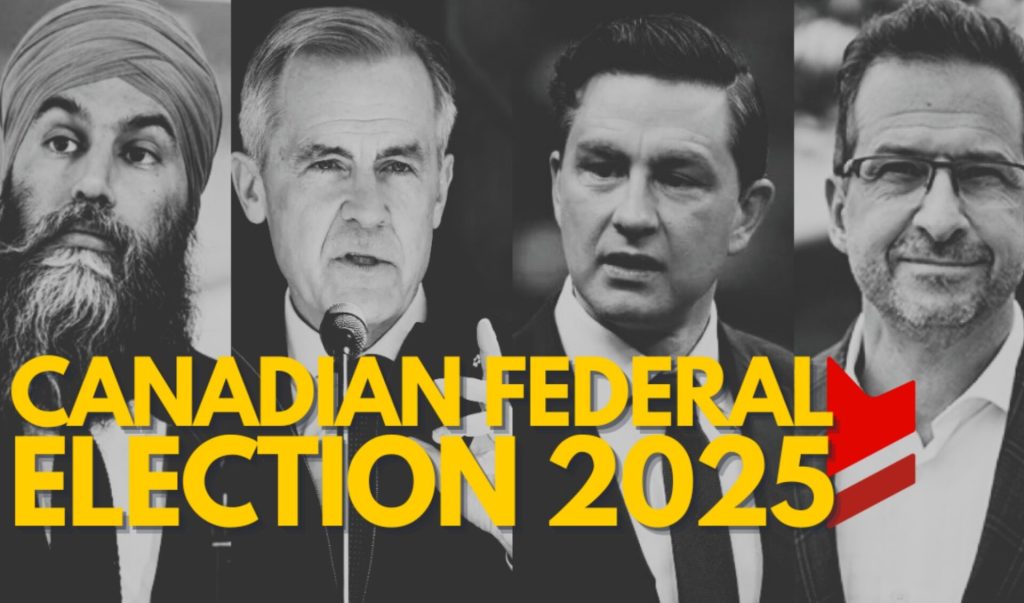
Today is Monday, April 28, the Canada Election Day! Even if I wish for the next Liberal Government under the leadership of Mark Carney, I wish all three Nepali candidates (Bijay Paudel, Bhutila Karpoche and Prashant Dhakal) all the best for their victory! If you have not voted already, please vote! It is your civic right and please exercise this right prudently!”
Before we enter into today’s topic, let’s have a look at these thinkings:
Nepali: “Nepalis never change, even in Canada!”
Indians: “These Indian people are like that.”
Bangladeshi: “Our Bangla people are just too jealous!”
Let’s start with double standards in diaspora identity. When I recently questioned the automatic support for Bijay Paudel solely based on his Nepali identity, the reactions exposed a fascinating contradiction in our diaspora psychology. The same community members who take immense pride in Nepali achievements simultaneously deploy self-deprecating tropes like “Nepalis never change, even in Canada!” to dismiss legitimate concerns. And, have a look at this one, too:
“The division is Nepal’s shared heritage—some label it as intellectualism, others advocate for wisdom, some politicize it, while many pursue selfish agendas. But however it unfolds, we must keep fighting. We must never give up—whether in Nepal or abroad. We must never abandon our identity. Long live Nepal! Long live Nepalis! Long live our intellect! Long live our conscience and political awareness! We built Nepal—with this same determination, Canada too will prosper. Let your intellect continue to guide the way!”
Both the statements above are from my own Facebook Wall!
This double standard bothered me a lot, and I wanted to study more about it. I came to know that it is common in other communities as well, at least among South Asians. This phenomenon—visible across South Asian diasporas from Indians saying “These Indian people are like that” to Bangladeshis lamenting “Our Bangla people are just too jealous!”—reveals deeper tensions about identity, power, and integration. These types of thinking or double standards really bothered me, and I wanted to know more about them.
These reactions stem from what postcolonial scholar Homi Bhabha calls “mimicry”—the colonized subject’s internalization of outsider perspectives. The Defensive Nationalist seeks white approval through respectability politics (“See how united we are!”), while the Exceptionalist craves inclusion by distancing themselves from the group (“I’m not like those other Nepalis”). Both positions:
Reduce complex policy debates to personality conflicts
Assume Western political norms are inherently superior
Ignore that healthy democracies require robust intragroup criticism
Moving beyond this paradox requires fundamental shifts in how we engage politically. First, we must learn to separate ethnic pride from policy substance.
Second, we need to reclaim “community” as an active practice rather than a passive identity. Real solidarity manifests in organizing town halls where candidates must explain policy specifics beyond photo-op platitudes.
Finally, we must normalize constructive criticism as healthy democratic practice, not “leg-pulling.” When someone dismisses policy questions as “typical Nepali negativity,” reframe the conversation: Point out how Filipino nurses achieved credential reforms through persistent advocacy, Indian-Canadians secured Punjabi language services in BC hospitals, or how Iranian-Canadians secured Farsi interpretation services by holding politicians accountable. Our community deserves the same rigor—not because we’re “backward,” but because we’re invested in building lasting power. The measure of our diaspora’s maturity won’t be whether we cheer loudest for Nepali candidates, but whether we can simultaneously take pride in their achievement while demanding they deliver measurable results.
The test of our diaspora’s maturity isn’t whether we produce Nepali politicians, but whether we can tell them: “We’re proud you’re Nepali—now here’s precisely how you’ll address our community’s needs.” When we transition from defensive pride to policy-smart engagement, we’ll stop being surprised that Nepalis can both celebrate our identity and demand better from each other—because that’s what thriving communities do.
As Canadians prepare to vote in a pivotal federal election, five major political parties are offering contrasting visions for the nation’s future—Prime Minister Mark Carney’s Liberals, Pierre Poilievre’s Conservatives, Jagmeet Singh’s New Democratic Party (NDP), Yves-François Blanchet’s Bloc Québécois, and Elizabeth May’s Green Party.
Although early media forecasts predicted a Conservative landslide, Mark Carney’s unexpected entry as Liberal leader in March 2025 dramatically reshaped the political landscape. By drawing significant support from traditional NDP voters, Carney has transformed what seemed a foregone conclusion into a competitive three-way contest, fundamentally redefining the stakes of the 2025 election.
The Leadership Contrast: Statesman vs. Perpetual Opponent
This election may offer the starkest leadership contrast in recent Canadian history. Mark Carney, the only person to have led both the Bank of Canada (2008–2013) and the Bank of England (2013–2020), brings economic expertise and global credibility. His leadership during the 2008 global financial crisis and his authorship of key climate finance frameworks underscore a reputation for thoughtful, evidence-based policymaking.
Pierre Poilievre, by contrast, has honed a reputation for perpetual opposition. In Ottawa, political observers describe his style as “oppositionism”—offering relentless criticism with little in the way of constructive alternatives. From blaming Prime Minister Justin Trudeau for global inflation to mocking climate policy without proposing viable energy alternatives, Poilievre has often reduced national discourse to partisan soundbites.
Immigration and Economic Policy: Two Diverging Paths
Carney’s Liberals continue to support Canada’s high-immigration model, welcoming over 400,000 newcomers in 2024. The policy addresses labor shortages and supports an aging population, with experts noting the positive impact on GDP and innovation. However, the sudden growth—amplified by 650,000 international students in 2023—has intensified Canada’s housing crisis, especially in cities like Toronto and Vancouver.
In February 2025, the government capped study permits at 437,000 to relieve pressure on housing and infrastructure. Though controversial, many economists believe this step was necessary to prevent further overheating of the market.
The Conservatives have seized on these challenges, promoting a “merit-based” immigration system. However, they have offered few details, and their rhetoric often recalls Stephen Harper-era policies that restricted family reunification and slashed refugee support—policies now blamed for workforce shortages in healthcare and construction.
Trade, Trump, and the Shadow of Protectionism
The specter of Donald Trump’s political resurgence has cast an unexpected shadow over Canada’s election. When Trump unexpectedly praised Mark Carney during a March 2025 interview, describing their phone conversation as “very meaningful” Conservative strategists scrambled to weaponize this diplomatic courtesy as proof of Liberal weakness on trade. Their efforts backfired spectacularly.
Seasoned observers recognized what Trump himself acknowledged – Carney’s unique credibility as the only leader to have successfully navigated both the 2008 financial crisis and Brexit turbulence. This credibility became Canada’s shield when Trump imposed aluminum and steel tariffs weeks later. While Carney responded with targeted subsidies for affected manufacturers and accelerated negotiations with the EU, Pierre Poilievre could only offer theatrical visits to steel plants, his empty rhetoric exposing the Conservative leader’s inability to match Carney’s nuanced statecraft.
For Canada’s trade-dependent economy, where 72 cents of every dollar earned comes from international commerce, this contrast couldn’t be starker – nor more consequential.
The Nepalese-Canadian Political Awakening
Canada’s Nepali diaspora finds itself at a defining crossroads, its political maturation tested by three competing visions embodied by its candidates:
Bijay Paudel (Conservative) – The NRNA leader’s campaign thrives on ethnic solidarity despite his party’s anti-immigration stance. His connections overshadow policy contradictions that would see family reunification programs gutted even as Nepal faces climate crises exacerbated by the very carbon tax he vows to eliminate.
Bhutila Karpoche (NDP) – Her landmark achievements on rent control and pharmacare go curiously ignored by the community she shares heritage with, her Tibetan-Nepali identity somehow rendering her less “authentic” in the eyes of those who claim to value representation.
Prashant Dhakal (Green Party) – The Ottawa West-Nepean candidate, whose climate tech background and advocacy for skilled immigrant credential recognition present the diaspora with its starkest generational choice yet. Where Paudel offers nostalgic cultural familiarity and Karpoche delivers progressive policy results, Dhakal forces a confrontation with planetary urgency.
This trio exposes deepening fault lines between ethnic solidarity and policy alignment. When activist Punya Sagar Marahatta questioned these contradictions in his viral post “The Unknown Candidate,” he revealed selective solidarity—where Paudel is embraced but Karpoche and Dhakal are marginalized—along with persistent hierarchies of caste, ethnicity, and generation.
Three Factions Evolve
The Nepalese-Canadian community’s political consciousness has crystallized into three distinct orientations, each reflecting broader Canadian political currents while wrestling with diaspora-specific tensions:
Traditionalists anchor themselves to Bijay Paudel’s Conservative candidacy with uncritical fervor, their allegiance to cultural identity trumping policy contradictions that would see them support a party advocating immigration restrictions harmful to their own community’s growth. This mirrors the Conservative base’s broader prioritization of cultural symbolism over material outcomes.
Reformers find themselves torn between Bhutila Karpoche’s proven track record on housing justice and Prashant Dhakal’s urgent climate agenda – a schism within progressive politics that sees the diaspora’s younger activists debating whether shelter or sustainability constitutes the more pressing frontline struggle.
Pragmatists, perhaps most intriguingly, operate as the community’s political barometer, their small business interests and centrist instincts making them alternately receptive to Paudel’s tax cut promises, Karpoche’s affordability measures, and Dhakal’s green entrepreneurship vision depending on which platform best addresses their immediate economic anxieties.
What unites these factions is their collective departure from passive ethnic bloc voting toward the messy but necessary work of issue-based political engagement – a maturation that ironically sees the Nepalese-Canadian political landscape increasingly resembling the complex pluralism of Canada itself.
The Stakes for Canada—and Nepalese-Canadians
This election transcends partisan preferences to confront Canadians with existential questions about the nation’s soul. Mark Carney’s candidacy represents the promise of competent globalism, his rare dual central banking experience offering ballast against the storms of Trumpian protectionism and climate disruption.
Pierre Poilievre’s Conservatives peddle the empty calories of perpetual grievance, his “just axe the tax” sloganeering substituting for serious policy while offering no meaningful alternative to address either affordability or environmental crises. Jagmeet Singh’s NDP, meanwhile, watches its historical progressive base erode as Carney’s Liberals co-opt their policy space – a political realignment leaving democratic socialists without a natural home.
For Nepalese-Canadians, these national dynamics manifest as a painful microcosm. The community must decide whether to follow its instincts toward the tribal comfort of Bijay Paudel’s ethnic familiarity, or embrace the policy substance offered by both Karpoche and Dhakal despite their lack of cultural cachet. This tension between ancestral loyalty and civic responsibility mirrors Canada’s own defining challenge – whether to retreat into the false security of identity politics or advance toward the more demanding but ultimately more rewarding terrain of evidence-based governance. The diaspora’s decision may well preshadow the nation’s.
Conclusion: A Test of Political Maturity
Canada stands at a crossroads. The 2025 federal election is a test not only of political leadership but of the nation’s democratic maturity. Will Canada choose evidence-based governance and inclusive policymaking—or retreat into grievance-driven populism? For immigrant communities, including Nepalese-Canadians, this moment demands more than tribal allegiances. It calls for thoughtful civic participation that values competence, transparency, and equity over mere representation. As the world watches, Canada must decide whether it will embrace a future defined by global engagement and evidence-based policy, or veer toward isolationism and identity politics. The path chosen will shape the country’s economy, identity, and global standing for generations to come.