
Dr. Rajendra K Panthee
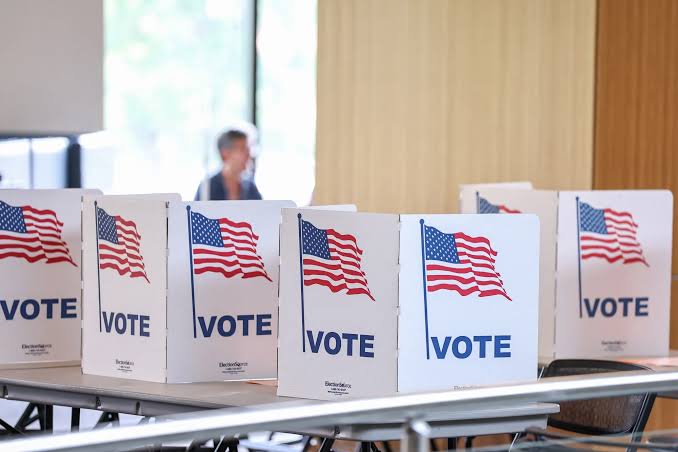
While driving from Toronto, Canada to Syracuse, New York today i.e., Sunday, Nov. 1, I listened to NPR and The New York Times’ The Daily discussing the upcoming US midterm elections. What stayed with me was not just the question of who might win. It was the extraordinary campaign spending, the historical disadvantage facing the president’s party, the disputes within parties, and the question of how much power Congress still exercises.
With Election Day on November 3, here are some developments and distinctions worth understanding.
Record spending deserves a closer look
One striking detail is the amount being spent on political advertising. NPR reports that the 2026 election cycle has set a record, according to advertising-tracking firm Ad Impact. A reported tally of approximately $11.22 billion includes advertising already aired and reservations through Election Day.
That qualification matters. Calling this the “most expensive election ever” can suggest a complete accounting of all campaign expenses. The figure being discussed concerns advertising, and it includes reservations—not just spending already completed.
NPR has also examined the role of megadonors and money connected to artificial intelligence, cryptocurrency, and pro-Israel lobbying groups. For voters, the question extends beyond the total: whose priorities receive the most attention when reaching the public costs so much?
History usually works against the president’s party
Only twice since World War II—in 1998 and 2002—has the sitting president’s party gained seats in the House of Representatives during a midterm election.
However, losing seats is not the same as losing control of the House. Nor does the pattern mean the House and Senate necessarily move in the same direction. Historical trends provide context, not a guaranteed result.
It would also be misleading to conclude that presidential approval does not matter. NPR’s reporting links Republican difficulties to President Trump’s unpopularity and voters’ concerns about rising costs. A late-October NPR/PBS News/Marist poll found that living costs remained a central concern.
The more useful question is how national dissatisfaction translates into turnout and individual races.
Executive orders do not make Congress irrelevant
Another question is whether congressional elections matter as much when a president relies heavily on executive action.
They still do. Congress is the federal government’s lawmaking branch, and the Senate confirms or rejects presidential nominees. The constitutional structure gives different branches powers that can check one another.
A president facing an opposition-controlled Congress is not automatically powerless. Equally, executive action does not eliminate Congress’s role. These elections help determine whether lawmakers will support the administration’s agenda or challenge it through their constitutional powers.
For me, this makes accountability one of the most important themes of the election—not simply which party celebrates on election night.
Alaska highlights the importance of clear voter information
Alaska’s Senate contest has drawn attention because incumbent Republican Dan S. Sullivan faces Democrat Mary Peltola and another candidate with a very similar name, Dan J. Sullivan.
The New York Times reported allegations that Peltola’s team worked with a group to recruit the similarly named candidate to draw votes from the incumbent. Peltola disputed allegations about her involvement.
This needs careful wording. A reported and disputed controversy should not be presented as established election fraud. Nevertheless, it illustrates why voters need accurate information about candidates and why potentially confusing names on a ballot deserve scrutiny.
Texas combines political opportunity with enormous expense
Texas is another race attracting national attention. Republican Ken Paxton and Democrat James Talarico are competing for a Senate seat, with The New York Times reporting a close contest in a state where Democrats have long struggled to win statewide.
It is also among the most expensive races. Al Jazeera reported more than $534 million in spending by campaigns and outside groups, with the contest projected to break Senate-race spending records. Final figures may change as additional spending is reported.
That combination—a potentially competitive race and extraordinary financial investment—makes Texas worth watching without assuming the outcome.
Michigan has produced a last-minute party split
On November 1, Democratic Congresswoman Haley Stevens endorsed Republican Senate candidate Mike Rogers instead of her own party’s nominee, Abdul El-Sayed. The announcement came just two days before Election Day.
Stevens had lost the Democratic Senate primary to El-Sayed and initially supported him. Her reversal followed an escalating public dispute. Michigan Democratic leaders have criticized her decision and reaffirmed their support for El-Sayed.
This matters because the Michigan contest could help determine Senate control. However, the endorsement’s electoral impact remains unknown. A prominent politician crossing party lines does not necessarily mean voters will follow.
Political labels are not a substitute for examining candidates
Some prominent progressive and Democratic Socialist candidates have won Democratic primaries. That does not establish that most Democratic nominees are socialists, or that those candidates will necessarily lose a general election.
For a factual discussion, it is better to identify a candidate’s stated positions than repeat labels such as “socialist” or “communist” as though they settle the argument. The relevant questions concern what candidates propose, what they can realistically deliver, and how voters assess those proposals.
What matters after the advertisements stop
These midterms bring together record advertising spending, historical pressures on the president’s party, close Senate contests, and visible internal divisions.
Yet the everyday concerns remain familiar. NPR’s reporting identifies the economy and living costs as major issues motivating voters.
After the results arrive, I will be watching more than which party gains seats. I will be watching whether the people elected respond to those concerns—and whether the campaign’s promises turn into meaningful legislative work.
Discover more from Toronto Realty and Rhetoric
Subscribe to get the latest posts sent to your email.
