
Introduction: The Delight of Linguistic Discovery
I never expected my playful observation about a political sign would spark such controversy. There it was—a conservative leader’s campaign board reading “Axe the Tax on Homes,” its words awkwardly divided across two lines. To my linguist’s eye, the accidental double meaning was irresistible: “Stop Sales / Tax Homes!!” The irony was perfect—a tax-cutting slogan that, through clumsy design, could be read as advocating precisely what it opposed. I shared this humorous linguistic discovery online, anticipating fellow word enthusiasts might enjoy the joke. Instead, I witnessed how quickly language play collides with political tribalism, and how our capacity for humor evaporates when ideology enters the conversation.
The Battle Over Meaning
The responses fell into distinct camps. The first commenter, a linguistically-inclined friend, set the tone with measured analysis: “When the given sentence is divided into two sentences, then you are right! Otherwise, I do not agree.” His distinction was crucial – he acknowledged the design’s ambiguity without dismissing the intended policy. My reply – “They divided it (for a reason), not I!” – highlighted how the sign’s formatting created the double meaning. His follow-up (“This is design, not a divide”) further clarified his view.
Then another participant offered a diplomatic perspective: “Yes, both of you are correct. It’s a very ambiguous sentence.” This comment was a quiet masterstroke, validating both perspectives while modeling how to depoliticize language.
The Spectrum of Reactions
The literalists analyzed the sign as a communication failure. One noted: “It should read ‘Axe the sales tax on new homes,'” pointing out how line breaks create unintended meanings. The defenders reacted as if I’d launched a political attack rather than a grammatical observation. “You’re misleading people!” insisted one particularly vocal participant, who later escalated: “It was deliberately made misleading by you… Someone like you shouldn’t do this seriously.” This revealed a deeper pattern – for some, any interpretation diverging from party orthodoxy wasn’t just wrong, but malicious.
The Psychology Behind the Responses
What fascinated me wasn’t the disagreement, but how predictably it followed documented psychological patterns. One defender shifted the conversation completely: “Nepali people never change, even in Canada! If you don’t understand English, try French!” Where some saw typography, others saw ideology.
Another participant’s evolving position was particularly telling. They first dismissed the conversation as “AI-generated info,” but later conceded it was simply “a design problem.” This reversal mirrored the classic pattern of conspiracy thinking – initial defensive outrage giving way to reluctant acknowledgment of facts.
The Conversation Spirals: Defensiveness and Distortions
The discussion took revealing turns when certain participants:
- Framed sarcastic remarks as honoring cultural heritage
- Made striking accusations completely absent from the original post
- Sought validation from respected community figures
One observer’s graceful refusal to be drawn in – “Don’t drag me into the dirt” – and another’s probing questions – “Where were Indigenous people defamed?” – underscored how far the conversation had diverged. The most insightful commentary came from those who understood political language operates on multiple levels: “Are we looking at formal or lexical semantics?”
Language as a Political Weapon
The campaign sign wasn’t just policy – it was a rhetorical Rorschach test. Supporters saw their preferred meaning, critics saw the clumsy messaging, and the campaign benefited from the engagement either way. This phenomenon isn’t unique to Canadian politics; similar vague, feel-good phrasing appears in slogans worldwide.
A Mirror for Our Digital Age
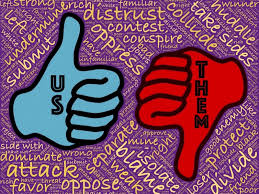
This micro-drama reflects our broader information crisis. When participants accused me of “deliberately misleading,” they weren’t engaging with the post – they were reacting to perceived threats to their political identity. We’ve become so accustomed to political warfare that even playful analysis gets weaponized.
Conclusion: Playfulness as Political Mirror
This entire episode began with what should have been an uncontroversial truth: language is inherently playful, and design choices create unintended meanings. My amusement at the sign’s ambiguity wasn’t just about the words themselves, but about how they revealed the fragility of political messaging.
The most telling response wasn’t the disagreement—it was the complete inability of some participants to even recognize the linguistic playfulness. Their insistence that “no competent English speaker could misunderstand the sign” ironically demonstrated their own constrained perception. In policing my observation, they revealed how political allegiance can literally narrow what we’re able to see in plain language.
Three crucial lessons emerge:
Humor is ideological – What one person finds amusing, another perceives as attack
Design has politics – Even accidental ambiguities reveal messaging vulnerabilities
Playfulness is power – The ability to see multiple meanings resists political framing
Perhaps the healthiest democratic practice would be embracing—rather than attacking—those who point out clumsy messaging. After all, if we can’t laugh at awkward phrasing, how will we ever confront substantive policy differences? The sign’s true revelation wasn’t its policy position, but how fiercely we’ll defend our team’s sloppy design—and how angrily we’ll attack those who notice it.
Discover more from Toronto Realty and Rhetoric
Subscribe to get the latest posts sent to your email.
